Disclaimer
This post may contain affiliate links. I will make a small commission if you make a purchase through one of these links, at no extra cost to you. See full disclosure and disclaimer policy HERE.

Victorian novels often conjure images of drawing rooms, rigid social etiquette, and restrained emotions. But every so often, a book breaks out of that polite literary cage and dives headfirst into the messy, fascinating realities of its time. That’s exactly what North and South by Elizabeth Gaskell does.
Published in 1855, this novel isn’t just a love story. It’s also a social commentary, a clash of cultures, and a surprisingly modern exploration of class conflict, industrialisation, and personal growth. Think of it as Pride and Prejudice—but with factory smoke, labour strikes, and philosophical debates about capitalism. So, is North and South worth reading today? Let’s dive in.
A Quick Overview of North and South
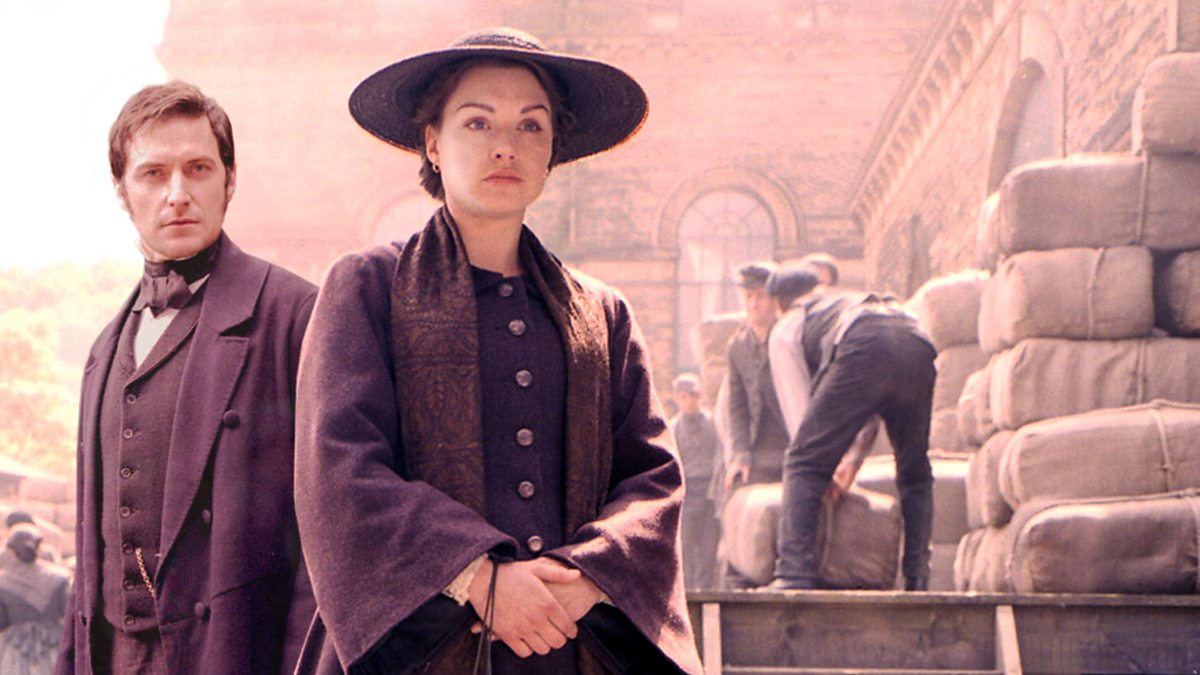
At its core, North and South follows Margaret Hale, a young woman from southern England whose comfortable life takes an unexpected turn. When her father leaves the Church of England due to a crisis of conscience, the family relocates to Milton, a fictional industrial city in northern England.
If the south is calm, pastoral, and refined, the north is loud, smoky, and restless. Mills roar, workers protest, and wealth is built on machinery and labour.
Margaret is shocked.
But as the story unfolds, her perspective begins to change—largely because of one man: John Thornton, a proud and self-made mill owner who represents everything she initially dislikes about the industrial north.
Their relationship is the emotional engine of the novel. Yet beneath the romance lies a deeper exploration of power, empathy, and social responsibility.

A Story About More Than Romance
If you go into North and South expecting only a Victorian love story, you’ll miss half the magic.
This novel is also about industrial England during the 19th century—a period when factories were transforming society at lightning speed.
Imagine living during the Industrial Revolution. One day you’re in a rural village surrounded by fields. The next, you’re in a city filled with chimneys and machines that never sleep. That’s the world Margaret enters.
Through her eyes, readers witness:
- Worker strikes
- Poverty and hunger
- Tension between factory owners and labourers
- Moral debates about wealth and responsibility
Gaskell doesn’t treat these issues as background noise. Instead, she puts them front and center, forcing readers to consider both sides of the conflict. Thornton believes discipline and hard work build success. Workers believe the system exploits them.
Who’s right? Gaskell refuses to give a simple answer.
Margaret Hale: A Strong and Thoughtful Heroine
Margaret Hale is one of the most compelling heroines in Victorian literature. She’s intelligent, compassionate, and—most importantly—willing to change her mind.
At the beginning of the novel, Margaret holds strong prejudices about the industrial north. To her, it seems harsh, crude, and morally questionable.
But as she meets the people of Milton—factory workers, struggling families, and even the stern Mr. Thornton—her worldview begins to evolve.
It’s fascinating to watch. Margaret isn’t static. She learns. She questions. She grows.
In many ways, she represents the reader: someone forced to reconsider assumptions about class, wealth, and humanity.
John Thornton: More Than the Typical Victorian Hero
Let’s talk about John Thornton. If you’re expecting a charming aristocrat in the style of Jane Austen, think again.
Thornton is a self-made industrialist, a man who clawed his way out of poverty through sheer determination. He’s disciplined, proud, and sometimes emotionally rigid.
At first glance, he might seem cold. But the deeper we go into the novel, the more layers we discover.
Thornton believes strongly in responsibility—to his workers, his mother, and the success of his business. Yet he also struggles with vulnerability, especially when it comes to Margaret.
Their relationship is full of tension, misunderstandings, and emotional restraint. It’s like watching two powerful currents in a river collide. And when they finally begin to understand each other? That’s when the real magic happens.
The North vs. South: A Cultural Collision
The title North and South isn’t just geographic—it’s symbolic.
The south represents tradition, gentility, and rural calm. The north represents industry, progress, and economic ambition.
Margaret arrives in Milton expecting to dislike everything about it. But the more time she spends there, the more complicated the picture becomes. Factories may be harsh environments, but they also create opportunity.
Workers may struggle, but they possess dignity and resilience. Mill owners may appear ruthless, but some genuinely care about improving conditions. Gaskell essentially asks readers a powerful question:
What happens when two completely different worlds are forced to coexist?
The answer, according to the novel, is transformation.
Social Commentary That Still Feels Relevant
Here’s the surprising part: North and South feels remarkably modern. The debates between workers and factory owners echo conversations we still hear today:
- Fair wages
- Workers’ rights
- Corporate responsibility
- Economic inequality
Sound familiar? Gaskell was writing in the 1850s, yet many of the themes feel like they belong in the 21st century.
The novel doesn’t demonise wealth or glorify poverty. Instead, it argues for mutual understanding—a radical idea in a world divided by class. Thornton eventually begins to see his workers not just as labourers but as people. And Margaret becomes the bridge between these worlds.
Writing Style: Rich, Observant, and Emotionally Intelligent
Elizabeth Gaskell’s writing style is elegant but approachable. She combines vivid descriptions with sharp psychological insight. Milton’s industrial landscape feels almost alive:
- Smoke rising like storm clouds
- Factory machines roaring like restless beasts
- Streets pulsing with the energy of labor and ambition
At the same time, Gaskell excels at capturing subtle emotional shifts between characters. A single conversation can feel like a chess match. One glance. One misunderstanding. One unexpected act of kindness. Small moments ripple through the entire story.
RELATED:
Why North and South Still Matters Today
Many classic novels fade into obscurity because their themes feel distant from modern life.
North and South is different.
It speaks directly to questions we still grapple with:
- How do we balance profit and compassion?
- What responsibility do leaders have toward workers?
- Can people from different social worlds truly understand each other?
Gaskell doesn’t offer perfect solutions. But she encourages empathy—and that might be even more valuable. In a world still divided by economic and cultural lines, North and South feels less like a relic of Victorian literature and more like a mirror held up to our own society.
Final Verdict
North and South is far more than a Victorian romance.
It’s a powerful exploration of class, industry, morality, and human connection. Through Margaret Hale’s journey, Elizabeth Gaskell invites readers to step outside their comfort zones and reconsider the world around them.
If you enjoy character-driven stories, social commentary, and slow-burn romance, this novel is absolutely worth your time. Think of it as a literary bridge between Jane Austen’s wit and Charles Dickens’ social awareness.
And once you cross that bridge, you might not want to come back.
Conclusion
Reading North and South is like walking through the smoky streets of industrial England while witnessing a deeply human story unfold. Elizabeth Gaskell masterfully blends romance with social critique, creating a novel that feels both historically rich and emotionally immediate.
Margaret Hale’s transformation—from a sheltered southerner to a woman capable of understanding multiple worlds—gives the story its beating heart. Meanwhile, John Thornton represents the complexity of ambition and responsibility in a rapidly changing society.
The result is a novel that doesn’t just entertain—it challenges readers to think, empathise, and reconsider their assumptions about class, work, and humanity.

FAQs
Did you like it? Pin this post for later!