Disclaimer
This post may contain affiliate links. I will make a small commission if you make a purchase through one of these links, at no extra cost to you. See full disclosure and disclaimer policy HERE.

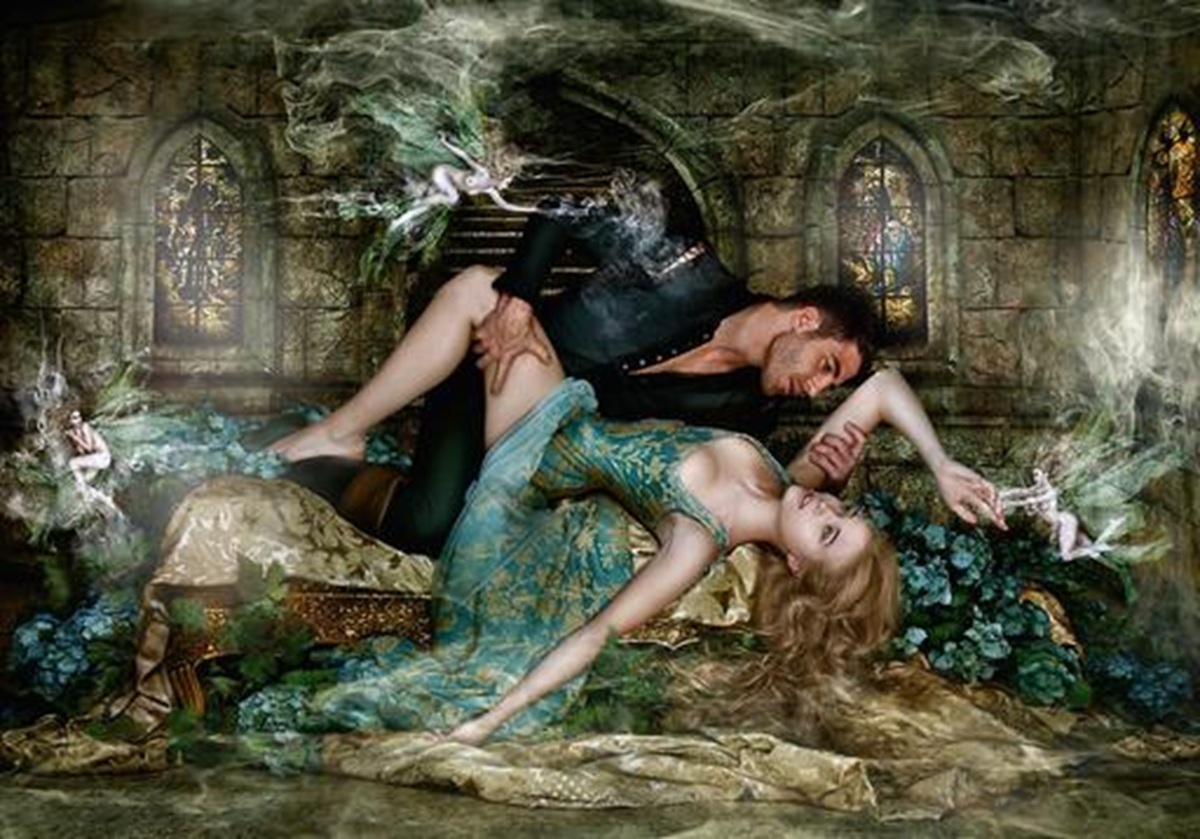
Fairy tales are supposed to be comforting, aren’t they? A cursed princess, a handsome prince, true love’s kiss, and a happily ever after wrapped in satin ribbons. Well… not this one.
The Claiming of Sleeping Beauty by Anne Rice takes the familiar story of Sleeping Beauty and drags it into a world dripping with eroticism, submission, punishment, and power dynamics. Published under Rice’s pseudonym A. N. Roquelaure, this novel is not simply a retelling of a fairy tale—it’s a provocative exploration of desire pushed to its absolute limits.
And honestly? Calling it “controversial” feels like calling the ocean “slightly damp.”
This book is bold, excessive, shocking, and unapologetically explicit. For some readers, it’s fascinating literary transgression. For others, it’s an immediate no. Either way, it’s impossible to ignore.
What Is The Claiming of Sleeping Beauty About?
The novel begins where the classic fairy tale ends.
Beauty awakens from her enchanted sleep expecting romance and tenderness. Instead, she is “claimed” by a prince and taken to a kingdom where obedience and erotic servitude are the law of the land.
From there, the story unfolds as Beauty undergoes training, humiliation, punishment, and submission alongside other royals who have also been sent away to serve.
Yes, this is very much an erotic novel. And not the subtle fade-to-black kind. Rice doesn’t tiptoe around sexuality—she cannonballs straight into it.

Anne Rice’s Writing Style: Lush, Sensual, and Hypnotic
Whatever your feelings about the content, Anne Rice could write atmosphere like few others.
Her prose is rich and immersive, almost like velvet soaked in perfume and candle wax. Even the darkest scenes are described with an elegance that feels strangely dreamlike. The writing seduces you into continuing, even when the material itself feels uncomfortable.
That’s part of what makes the book so compelling.
Rice writes excess beautifully. Every emotion is heightened. Every sensation is amplified. Reading this novel can feel like wandering through a hall of mirrors—distorted, glittering, and impossible to look away from.
Themes Beneath the Eroticism
At first glance, the book may seem entirely focused on shock value. But beneath the explicit content lies a deeper exploration of power, shame, control, identity, and submission.
Rice examines what happens when societal rules are stripped away and replaced with absolute surrender. The kingdom in the novel operates almost like an alternate universe with its own morality—one where humiliation becomes ritual and obedience becomes currency.
It’s uncomfortable because it forces readers to confront questions they may not want to ask.
Where is the line between freedom and control?
Can desire exist without power imbalance?
Why are forbidden stories often the hardest to stop reading?
The novel doesn’t necessarily provide answers. Instead, it throws readers into the fire and lets them wrestle with the smoke.
RELATED:
Not for Every Reader—and That’s an Understatement
Let’s be clear: this book is extremely explicit.
It contains graphic sexual content, BDSM themes, domination, punishment, and nontraditional relationship dynamics that many readers may find disturbing or offensive. Going into this novel expecting a spicy fairy tale romance would be like ordering wine and accidentally drinking gasoline.
This is literary erotica turned all the way up.
Some readers view the novel as an exploration of fantasy detached from reality. Others criticise it heavily for its themes and content. Reactions tend to be intensely polarised—people either become morbidly fascinated or immediately abandon ship.
There’s rarely a middle ground.
The Fairy Tale Element Makes It Stranger
What makes the book particularly unsettling is the contrast between familiar fairy tale imagery and the explicit subject matter.
Castles, princes, royal courts, and enchanted beauty are all still present—but twisted into something darker and more decadent. It’s like taking a Disney castle and filling it with gothic shadows and whispered secrets behind velvet curtains.
That clash between innocence and corruption gives the novel its bizarre magnetism.
Rice understood that fairy tales have always contained darkness beneath their polished surfaces. She simply ripped away the decorative wallpaper and exposed it completely.
Is It Actually Well Written?
Surprisingly… yes.
Even critics of the novel often admit that Rice’s writing is vivid and immersive. The pacing flows quickly, the atmosphere is intoxicating, and the world-building feels strangely complete despite the surreal premise.
The issue for most readers isn’t the quality of the prose—it’s whether they can stomach the content itself.
And that distinction matters.
Because The Claiming of Sleeping Beauty isn’t poorly written shock fiction. It’s deliberate, stylised, literary erotica written by an author who knew exactly how to manipulate mood and emotion.
Final Verdict
Reading The Claiming of Sleeping Beauty feels a bit like entering a forbidden room you know you probably shouldn’t open.
It’s uncomfortable. Seductive. Excessive. Disturbing. Hypnotic.
Anne Rice transforms a beloved fairy tale into something darkly theatrical and psychologically charged. Whether readers interpret it as daring artistic exploration or simply too extreme will depend entirely on personal taste and comfort levels.
But one thing is certain: this is not a forgettable book.
It lingers in the mind like perfume in an empty hallway—strange, haunting, and impossible to fully shake off.

Conclusion
The Claiming of Sleeping Beauty is one of those books people whisper about. Some praise its fearless exploration of fantasy and eroticism, while others see it as deeply unsettling and problematic. Either way, Anne Rice succeeded in creating a novel that provokes strong reactions—and perhaps that was always the point.
This isn’t a casual beach read or a sweet fairy tale retelling. It’s a dark, provocative descent into power, desire, and submission wrapped in lush prose and gothic atmosphere.
For adventurous readers interested in boundary-pushing literature, it may be fascinating. For others, it may be a book best left unopened.
And honestly? Both reactions are completely understandable.
FAQs
Did you like it? Pin this post for later!