Disclaimer
This post may contain affiliate links. I will make a small commission if you make a purchase through one of these links, at no extra cost to you. See full disclosure and disclaimer policy HERE.

There’s something wonderfully irresistible about a book that celebrates books.
Maybe it’s a novel set inside a labyrinthine library, where dusty shelves conceal secrets no one was supposed to uncover. Maybe it’s a story about an eccentric bookseller whose entire life revolves around literature. Or perhaps it’s a fantasy where books aren’t simply objects at all—they’re portals, weapons, memories, or even living things.
Whatever the case, books about books have a peculiar kind of magic. They make readers feel as though they’ve been invited backstage into the world they already love.
And if you’re the sort of person who walks into a library and immediately feels calmer, you’re definitely in the right place.
From mysterious manuscripts and forgotten libraries to enchanted bookshops and literary puzzles, here are some of the best fiction books about books, libraries, bookstores, and the people who can’t imagine living without them.
Best Fiction Books About Books, Libraries, and Bookstores
1. The Shadow of the Wind by Carlos Ruiz Zafón
Few novels capture the romance of books quite like The Shadow of the Wind.
Set in post-war Barcelona, the story begins when young Daniel Sempere is taken by his father to the Cemetery of Forgotten Books, an enormous secret library containing books that have largely disappeared from public memory.
Daniel is allowed to choose one book to protect.
He selects The Shadow of the Wind by the mysterious Julián Carax—and promptly discovers that someone has been systematically destroying every copy of Carax’s work.
Naturally, Daniel wants to know why.
What follows is part literary mystery, part gothic romance, part historical novel. Libraries, bookshops, writers, collectors, forgotten manuscripts, and obsessive readers all become pieces of an increasingly complicated puzzle.
Zafón makes literature feel almost supernatural. Books aren’t merely things people read. They carry memories from one generation to another.
If you love atmospheric novels, secret libraries, old Barcelona, and literary mysteries, start here.

RELATED:
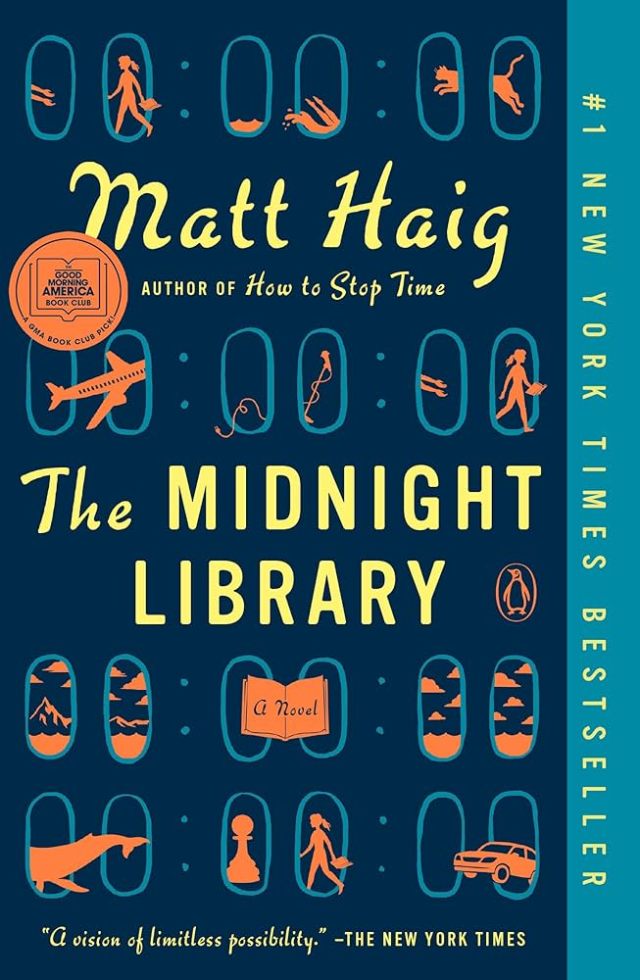
2. The Midnight Library by Matt Haig
Imagine discovering a library containing every life you could have lived.
That’s the premise behind Matt Haig’s The Midnight Library.
Between life and death, Nora Seed finds herself inside a mysterious library where each book represents a different version of her existence. By opening one, she can experience what might have happened if she had made different decisions.
What if she had pursued another career? Stayed in a relationship? Moved somewhere else? Followed a forgotten dream?
The library becomes a gigantic archive of possibility.
Unlike many novels on this list, books aren’t primarily celebrated here as literary objects. Instead, the library works as a metaphor for choice, regret, possibility, and the endless roads we imagine we could have taken.
It’s accessible, philosophical without becoming overly complicated, and especially appealing if you enjoy stories that ask big questions through imaginative premises.
3. The Book Thief by Markus Zusak
In The Book Thief, books represent something far more dangerous than entertainment.
They represent freedom.
Set in Nazi Germany, the novel follows Liesel Meminger, a young girl who begins stealing books even before she fully understands how to read them.
As her relationship with language develops, words become both refuge and rebellion.
And that distinction matters because The Book Thief is ultimately fascinated by the contradictory power of language. Words can comfort people. They can preserve memories and build relationships. But they can also manipulate entire populations.
The result is a deeply emotional story about storytelling itself.
It’s also narrated by Death, which should give you some indication that this isn’t exactly light reading.

RELATED:
4. The Name of the Rose by Umberto Eco
A medieval monastery. A mysterious library. A series of deaths. And one very dangerous book.
Umberto Eco’s The Name of the Rose is essentially what might happen if Sherlock Holmes wandered into a medieval theological debate and discovered that the library was trying to kill him.
The novel follows Franciscan friar William of Baskerville as he investigates mysterious deaths at a Benedictine monastery in 1327.
At the centre of everything stands the monastery’s extraordinary library.
This isn’t your friendly neighbourhood library either.
It’s secretive, labyrinthine, restricted, and deliberately difficult to navigate. Knowledge here means power, and controlling access to books means controlling what people are allowed to think.
Eco mixes detective fiction, semiotics, philosophy, theology, history, politics, and literary theory into an intellectual mystery unlike almost anything else.
It can be demanding.
But if you like books that make your brain work while simultaneously giving you murder, forbidden manuscripts, medieval intrigue, and a labyrinthine library, the effort is absolutely worth it.

RELATED:
5. The Invisible Library by Genevieve Cogman
What if librarians traveled between alternate realities stealing rare books?
Suddenly librarianship sounds considerably more dangerous.
Genevieve Cogman’s The Invisible Library introduces Irene, a professional Librarian working for a mysterious organisation that exists between alternate worlds.
Her job involves retrieving important books from different realities.
Of course, retrieving them isn’t always particularly legal.
When Irene is sent to an alternative London to acquire a rare version of Grimm’s Fairy Tales, the mission quickly becomes complicated by supernatural creatures, rival agents, dangerous secrets, and competing forces.
The result combines fantasy, adventure, mystery, espionage, and bibliophilia.
Better still, it’s the beginning of a series, so readers who fall in love with its literary multiverse have plenty more to explore.

6. Mr. Penumbra’s 24-Hour Bookstore by Robin Sloan
A bookstore that never closes already sounds suspiciously appealing.
But the bookstore in Robin Sloan’s Mr. Penumbra’s 24-Hour Bookstore is stranger than most.
After losing his job, Clay Jannon begins working the night shift at an unusual San Francisco bookstore. He soon notices that certain customers aren’t actually buying ordinary books.
Instead, they borrow mysterious volumes from obscure shelves.
Clay starts investigating.
That investigation leads him into a centuries-old mystery involving secret societies, cryptography, typography, technology, and the possibility of immortality.
One of the most enjoyable aspects of the novel is the tension between old and new.
Printed books and digital technology aren’t necessarily enemies here. Instead, the story asks what happens when centuries-old knowledge meets contemporary tools.
It’s quirky, clever, and ideal for anyone who likes puzzles almost as much as books.

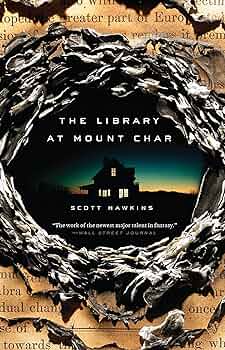
7. The Library at Mount Char by Scott Hawkins
This is a library novel—but probably not the kind you’re imagining.
The Library at Mount Char follows Carolyn, who was raised alongside several other children by a mysterious figure known as Father.
Each child is assigned a particular area of knowledge contained within an enormous library.
And these aren’t ordinary subjects.
The knowledge within this library can alter reality itself.
When Father disappears, the carefully controlled world he created begins to unravel.
The result is bizarre, dark, violent, imaginative, and extraordinarily difficult to categorise. Fantasy? Horror? Science fiction? Mythology?
A little of everything.
If your idea of the perfect library novel involves cosy armchairs and tea, perhaps look elsewhere.
If you want a library containing terrifying knowledge humans were never meant to possess, welcome aboard.
8. The Book of Speculation by Erika Swyler
Simon Watson is a librarian living alone in an old family house slowly surrendering itself to the sea.
Then an unusual antique book arrives.
The book once belonged to the owner of a travelling carnival and contains records suggesting something disturbing about Simon’s family history.
Women in his family have repeatedly died by drowning. On the same date.
Simon begins investigating the book in an attempt to understand—and perhaps prevent—the pattern from repeating.
The Book of Speculation blends family history, magical realism, circus folklore, old manuscripts, and mystery into an atmospheric story about the ways the past survives through objects.
Books here become historical evidence, carrying fragments of lives that would otherwise have vanished.

9. The Storied Life of A.J. Fikry by Gabrielle Zevin
Not every book about books needs secret societies or supernatural libraries.
Sometimes you just need a bookstore.
A.J. Fikry owns a small independent bookstore on Alice Island. He’s lonely, increasingly isolated, and not exactly overflowing with enthusiasm about life.
Then something unexpected appears in his bookstore and changes everything.
At its heart, The Storied Life of A.J. Fikry is about human connection.
Books bring people together. They provide common ground between strangers. They help us communicate things we might struggle to explain ourselves.
It’s warm, emotional, occasionally bittersweet, and particularly enjoyable for anyone who has ever dreamed of owning a little bookstore somewhere picturesque.

10. The Reading List by Sara Nisha Adams
Can a reading list change someone’s life? In this novel, it just might.
A mysterious handwritten list of books begins circulating through a community in London, eventually connecting people who might otherwise never have known one another.
Among them are widower Mukesh and teenager Aleisha, who works at a local library.
Their developing friendship becomes intertwined with the books they read.
Unlike fantasies where libraries contain magical portals, The Reading List explores a quieter kind of magic: the ability of stories to create empathy.
Books allow characters to understand themselves and one another differently.
For anyone who believes reading can create genuine human connections, this one hits particularly close to home.

11. The Library Book by Susan Orlean
A small technicality here: The Library Book isn’t fiction.
But it deserves a brief honorary mention because anyone fascinated by libraries will probably find it difficult to resist.
Susan Orlean investigates the devastating 1986 fire at the Los Angeles Central Library while simultaneously exploring library history, librarianship, architecture, and the cultural importance of public libraries.
Think of it as the nonfiction companion to your fictional library obsession.
And yes, you may emerge from it feeling even more protective of libraries than you were before.

12. The Strange Library by Haruki Murakami
Libraries are supposed to be safe. Haruki Murakami apparently didn’t get the memo.
In The Strange Library, a boy visits his local library looking for information and ends up imprisoned in a bizarre underground labyrinth.
From there, things become increasingly surreal.
There are strange characters, impossible situations, dream logic, fear, loneliness, and the unmistakable feeling that reality has quietly slipped sideways.
It’s short, strange, unsettling, and unmistakably Murakami. You could easily read it in an afternoon.
Understanding exactly what happened may take considerably longer.

13. The Library of Babel by Jorge Luis Borges
Technically, this is a short story rather than a novel, but no list about fictional libraries feels complete without Borges.
In The Library of Babel, the universe itself is imagined as an enormous library composed of seemingly endless hexagonal rooms.
The books within it contain every possible combination of letters.
That means somewhere inside the library exists every book that has ever been written—and every book that could ever be written.
Your biography is there. So is a book containing nothing but nonsense. So is another explaining the meaning of existence.
The problem? Finding the right one.
Borges transforms the library into a metaphor for infinity, knowledge, meaning, randomness, and humanity’s desperate attempt to impose order upon chaos.
It’s tiny compared with most books on this list, but conceptually enormous.

RELATED:
14. The Eyre Affair by Jasper Fforde
What if you could physically enter a novel? Jasper Fforde takes that idea and runs gleefully wild with it.
The Eyre Affair introduces literary detective Thursday Next in an alternate version of 1985 where literature occupies an unusually important place in society.
When characters begin disappearing from Jane Eyre, Thursday becomes involved in an increasingly absurd literary adventure.
Fforde fills the novel with references, jokes, wordplay, alternate history, and affectionate mockery of literary culture.
It’s particularly enjoyable if you’ve read a lot of classics because half the fun comes from recognising what the novel is playing with.
Think literary criticism after several cups of coffee and absolutely no adult supervision.

15. The Ten Thousand Doors of January by Alix E. Harrow
Some books open doors metaphorically. Others do it literally.
January Scaller grows up surrounded by strange objects in the mansion of a wealthy collector. Then she discovers an unusual book describing secret doors connecting different worlds.
Gradually, the story within that book begins overlapping with her own.
The result is a beautifully written fantasy about stories, identity, belonging, exploration, and the power of narratives to change reality.
If you love books within books, forgotten histories, magical portals, and stories about discovering that the world is much larger than you were taught to believe, this is an excellent choice.

16. The Book That Wouldn’t Burn by Mark Lawrence
Imagine a library so enormous that civilisations can rise and fall inside it.
That’s the scale of Mark Lawrence’s The Book That Wouldn’t Burn.
At the centre of the novel stands a vast, ancient library filled with seemingly limitless knowledge. Different characters encounter it from dramatically different perspectives, gradually revealing a much larger mystery involving knowledge, history, identity, and time.
The library isn’t merely a setting. It becomes almost a universe unto itself.
For fantasy readers who want their fictional libraries enormous, mysterious, and potentially reality-altering, this is an ambitious choice.

17. The Dictionary of Lost Words by Pip Williams
Books preserve language—but who decides which words deserve preservation?
The Dictionary of Lost Words explores that question through Esme, a young girl who grows up around the creation of the Oxford English Dictionary.
She begins collecting words that are discarded, overlooked, or considered unsuitable for inclusion.
Many belong to women, working-class communities, and everyday life.
The novel becomes an exploration of language, power, gender, and cultural memory.
Although it’s more concerned with dictionaries and words than libraries themselves, it belongs comfortably on any reading list celebrating books about books.
After all, before we can build libraries, we need words worth putting inside them.

18. The Cat Who Saved Books by Sōsuke Natsukawa
A talking cat appears in a secondhand bookstore and asks for help rescuing books.
Do you really need another reason?
Rintaro Natsuki inherits his grandfather’s beloved bookshop and expects he may have to close it. Then a mysterious talking cat named Tiger arrives and leads him through a series of strange labyrinths.
Their mission revolves around rescuing books from people who mistreat or misunderstand them.
Underneath its whimsical premise lies a thoughtful question: what does it actually mean to love books?
Is collecting them enough? Reading enormous quantities? Displaying impressive editions?
Or does literature only become meaningful when we genuinely engage with it?
It’s charming, philosophical, and particularly suited to readers who like their bibliophile fiction with a touch of magic.

Why Do We Love Fiction About Books So Much?
There’s something wonderfully recursive about reading a book about reading books.
It’s like looking into a mirror that contains another mirror.
Part of the attraction comes from recognition. Readers understand the pleasure of discovering an unexpected book, wandering between shelves, smelling old paper, or becoming so absorbed in a fictional world that ordinary reality temporarily disappears.
But libraries also make unusually powerful fictional settings.
They contain knowledge, and knowledge creates mysteries.
What has been forgotten?
What has been deliberately hidden?
Who controls access?
What happens when someone discovers something they weren’t supposed to know?
That’s why fictional libraries can become everything from cosy sanctuaries to terrifying labyrinths.
Books themselves work similarly.
A fictional book can contain evidence, secrets, memories, forbidden ideas, lost histories, magical spells, or entire worlds.
Perhaps that’s why writers keep returning to them.
A locked room contains one mystery. A locked library contains thousands.

Conclusion
Books about books offer one of literature’s most delightful paradoxes: they turn the act of reading itself into part of the adventure.
Some celebrate libraries as sanctuaries. Others transform them into labyrinths, supernatural dimensions, archives of forgotten knowledge, or battlegrounds over who gets to control information.
And sometimes the book itself becomes the mystery.
Whether you prefer the gothic atmosphere of The Shadow of the Wind, the intellectual labyrinth of The Name of the Rose, the literary absurdity of The Eyre Affair, or the magical possibilities of The Invisible Library, there’s something uniquely satisfying about encountering characters who understand what readers already know.
Books are never just paper and ink. Open the right one, and who knows where you’ll end up?
FAQs
Did you like it? Pin this post for later!