


Disclaimer
This post may contain affiliate links. I will make a small commission if you make a purchase through one of these links, at no extra cost to you. See full disclosure and disclaimer policy HERE.

Some books tell a story. Others take you on a journey so strange, demanding, and unforgettable that you find yourself thinking about them long after turning the final page. Moby-Dick by Herman Melville belongs firmly in the second category. First published in 1851, this monumental American novel has earned its place among the greatest works of world literature. But does its reputation mean it is actually enjoyable to read? And is the famous white whale worth chasing?
The short answer is yes, although perhaps not for the reasons you might expect.
At first glance, Moby-Dick appears to be a straightforward adventure story about a whaling ship, a mysterious captain, and an enormous white whale. Yet beneath its maritime setting lies a remarkably ambitious exploration of obsession, revenge, human nature, religion, fate, and the limits of knowledge. Melville takes a relatively simple premise and turns it into something much bigger: a philosophical voyage into the depths of the human mind.
So, if you are considering reading this classic, here is what you should know.
What Is Moby-Dick About?
The novel begins with one of literature’s most recognisable opening lines: “Call me Ishmael.” Our narrator, Ishmael, is a young man who decides to go to sea because he feels restless and dissatisfied with life on land. Looking for adventure, he travels to New Bedford, Massachusetts, where he meets Queequeg, a Polynesian harpooner covered in tattoos.
Despite their very different backgrounds, the two quickly become friends and eventually sign up for a whaling expedition aboard the Pequod, a ship commanded by the mysterious Captain Ahab.
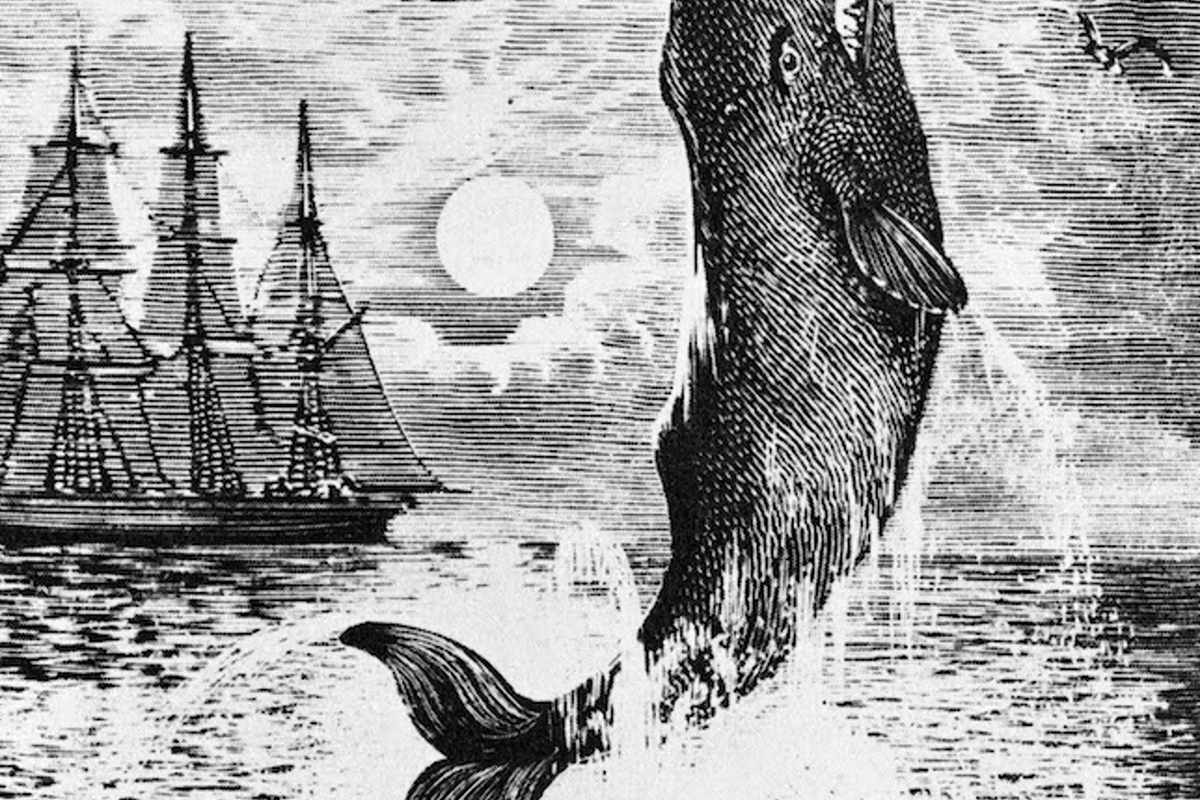
At first, the voyage seems like an ordinary commercial expedition. However, the crew soon discovers that Ahab has a much more personal objective. He is hunting Moby Dick, an enormous white sperm whale that previously destroyed his ship and tore off one of his legs.
Ahab’s mission is not simply to capture the whale. He wants revenge.
As the Pequod travels across the oceans, Ahab becomes increasingly consumed by his obsession. He sees Moby Dick as something far more significant than an animal, treating the whale as the embodiment of all the evil, injustice, and suffering in the universe.
His determination gradually puts the entire crew in danger. While some sailors recognise the madness behind their captain’s mission, others remain loyal to him, either out of fear, admiration, or a belief in his authority.
What begins as a whaling expedition slowly transforms into a tragic confrontation between human ambition and forces that may be impossible to understand or control.

The Characters: More Than a Captain and a Whale
One of the most interesting aspects of Moby-Dick is its cast of characters. Although the novel revolves around Ahab’s obsession, Melville gives considerable attention to the people aboard the Pequod, creating a fascinating collection of personalities, beliefs, and contradictions.
Captain Ahab is undoubtedly the central figure. He is intelligent, commanding, and undeniably charismatic, but his desire for revenge gradually destroys his ability to distinguish between justice and madness. His obsession makes him a fascinating character because he is neither entirely sympathetic nor entirely monstrous. You can understand his suffering without necessarily agreeing with what he does.
Ishmael, meanwhile, provides the perspective through which we experience the voyage. Curious, reflective, and occasionally humorous, he is much more than a simple narrator. His observations allow Melville to explore everything from friendship and religion to science and philosophy. His survival also gives the story an interesting dimension: he is both a participant in the tragedy and the person who must make sense of it afterward.
Queequeg is another memorable character. Despite initially being presented as an intimidating stranger, he turns out to be one of the most compassionate and loyal individuals aboard the ship. His friendship with Ishmael challenges conventional ideas about civilisation, cultural differences, and religious identity.
Other characters, including Starbuck, the Pequod’s first mate, and the harpooners Tashtego and Daggoo, contribute to the novel’s exploration of loyalty, morality, and the different ways people respond to authority.
What makes these characters particularly interesting is that they are not simply there to move the plot forward. They represent different perspectives on life, faith, responsibility, and the unknown.
Themes and Symbolism: What Does the White Whale Really Represent?
If you expect Moby-Dick to be nothing more than a story about hunting a whale, prepare for a surprise. Melville uses the central conflict to explore some of the most complicated questions in human existence.
Obsession and revenge
The most obvious theme is the destructive nature of obsession. Ahab allows one traumatic experience to define the rest of his existence. Instead of accepting that the whale is a powerful animal acting according to its nature, he turns it into his personal enemy.
His desire for revenge becomes so overwhelming that everything else loses importance, including the lives of his crew.
It is a powerful reminder of what happens when a person allows a single goal to consume their entire identity.
The struggle against nature
Moby Dick can also be interpreted as a symbol of nature’s immense and unpredictable power. The whale does not necessarily represent evil. It simply exists, indifferent to human ambitions and interpretations.
Ahab, however, refuses to accept this indifference. He wants the universe to have a face, a purpose, and an enemy he can defeat.
This creates one of the novel’s central questions: are human beings capable of understanding the world around them, or do they simply impose their own meanings on things they cannot comprehend?
Religion, fate, and the meaning of existence
Melville frequently explores religious and philosophical ideas throughout the novel. Characters discuss God, destiny, morality, and the possibility that human beings are subject to forces beyond their control.
Ahab’s struggle can even be interpreted as a rebellion against the universe itself. He refuses to accept suffering as something random or inevitable. Instead, he demands an explanation and seeks someone, or something, to punish.
Friendship and human connection
Interestingly, the relationship between Ishmael and Queequeg offers a counterbalance to Ahab’s destructive obsession.
Their friendship develops despite cultural differences and social expectations. It suggests that genuine human connection can exist beyond the boundaries imposed by religion, nationality, and conventional ideas of civilisation.
While Ahab becomes increasingly isolated by his hatred, Ishmael discovers companionship through openness and acceptance.
What Makes Moby-Dick Such an Important Literary Classic?
There is a reason Moby-Dick continues to appear on lists of the greatest novels ever written. Melville was doing something remarkably ambitious for his time.
First, the novel refuses to follow a conventional narrative structure. Instead of focusing exclusively on the events of the voyage, Melville frequently interrupts the story with chapters about whales, whaling practices, maritime traditions, scientific classifications, and philosophical reflections.
Some chapters read like adventure fiction. Others resemble scientific essays, theatrical scenes, sermons, or philosophical investigations.
This unusual structure may seem strange to modern readers, but it is also part of what makes the novel distinctive. Melville wanted to capture the complexity of the world rather than reduce everything to a simple sequence of events.
The writing itself is equally remarkable. His language is rich, dramatic, poetic, and sometimes deliberately excessive. He uses biblical references, Shakespearean expressions, humour, symbolism, and elaborate metaphors to create a narrative that feels almost larger than life.
The novel also helped shape the development of American literature. Its experimental structure, psychological complexity, and philosophical ambition influenced generations of writers who followed.
Interestingly, Moby-Dick was not particularly successful when it was first published. Contemporary readers and critics were divided, and Melville never enjoyed the literary recognition he had hoped for during his lifetime. Its reputation grew considerably in the twentieth century, when critics and scholars began recognising its extraordinary literary achievements.
Is Moby-Dick Difficult to Read?
Let’s address the question many potential readers are probably asking.
Yes, Moby-Dick can be difficult to read.
And no, it is not simply because the novel is long.
Melville’s writing style can be challenging, particularly if you are accustomed to contemporary fiction. The language is sometimes archaic, the sentences can be unusually long, and the narrative frequently wanders away from the central storyline.
There are entire chapters devoted to whales, their anatomy, their classification, and the practical details of the whaling industry. Some readers find these sections fascinating, while others struggle to understand why they are reading several pages about whale oil when they are waiting for Ahab to find his enormous nemesis.
The pacing can also be frustrating. Just when the story seems ready to move forward, Melville introduces another philosophical reflection or technical explanation.
However, this does not mean the novel is inaccessible.
A good approach is to stop expecting a conventional adventure story. Think of Moby-Dick as a collection of interconnected explorations surrounding one central narrative. Some chapters advance the plot, while others deepen its themes, atmosphere, and symbolism.
You do not need to understand every reference or philosophical observation to appreciate the book. Reading a little background about Melville, the historical whaling industry, and the novel’s major themes can also make the experience considerably easier.
Most importantly, give yourself time. This is not necessarily a book to rush through.
What I Loved About Moby-Dick
What makes Moby-Dick so impressive is the sheer ambition behind it. Melville takes a relatively simple story about revenge and transforms it into an exploration of humanity’s relationship with the world.
The characters are compelling, particularly Ahab, whose charisma and psychological deterioration make him one of the most fascinating figures in classic literature. His speeches are often dramatic, intense, and unsettling, revealing a man who would rather destroy everything than abandon his mission.
I also particularly enjoyed the relationship between Ishmael and Queequeg. Their friendship introduces warmth and humour into an otherwise increasingly dark narrative. It is a reminder that the novel is not exclusively concerned with obsession and tragedy.
Another strength is Melville’s ability to create atmosphere. The ocean becomes almost a character in its own right: beautiful, terrifying, mysterious, and completely indifferent to the people navigating it.
And then there is the symbolism. The white whale is one of literature’s most intriguing symbols precisely because it refuses to offer a definitive interpretation. Is it nature? Evil? God? Fate? The unknowable? Perhaps the most interesting possibility is that it can represent all these things, depending on who is looking at it.
What I Didn’t Love About Moby-Dick
Despite its literary achievements, Moby-Dick is not without its weaknesses, at least from the perspective of a modern reader.
The biggest challenge is undoubtedly its pacing. The constant interruptions can make it difficult to maintain momentum, especially when the narrative shifts from an important dramatic moment to several chapters of technical information.
Some of these sections are genuinely interesting, but others feel unnecessarily long. Melville’s fascination with whales is understandable, considering the novel’s subject, but readers primarily interested in the story may find themselves losing patience.
The writing style can also become exhausting. Its elaborate descriptions and philosophical digressions are part of the novel’s identity, yet there are moments when the prose feels more complicated than the ideas it is trying to communicate.
Finally, the novel requires a certain amount of patience from its readers. If you prefer tightly structured narratives with constant action and clearly defined character development, you may find the experience frustrating.
However, these criticisms do not diminish the novel’s importance. They simply mean that Moby-Dick demands a particular kind of reading experience.
Who Should Read Moby-Dick?
I would recommend Moby-Dick to readers who enjoy literary classics, philosophical fiction, symbolism, and stories that explore the darker aspects of human psychology.
It is particularly rewarding for anyone interested in questions about obsession, revenge, religion, morality, and humanity’s place in the natural world.
If you enjoy authors who experiment with narrative structure and language, you will probably appreciate Melville’s approach.
However, if you are looking for a fast-paced maritime adventure, this might not be the book you expect. Although it contains exciting moments, the philosophical and descriptive sections occupy a substantial part of the novel.
My advice? Read it when you are genuinely interested in exploring a literary classic, rather than simply trying to tick another famous title off your reading list.

Conclusion
Moby-Dick is demanding, occasionally frustrating, and sometimes unnecessarily complicated, but it is also an extraordinary literary achievement. Herman Melville creates a story that operates on several levels, combining adventure, tragedy, philosophy, symbolism, and social commentary into one unforgettable narrative. Captain Ahab’s obsession remains a powerful portrait of human ambition taken to its most destructive extreme, while the mysterious white whale continues to invite interpretations more than a century and a half after the novel’s publication. It may not be the easiest classic to read, but it is certainly one of the most rewarding. If you are willing to embrace its unusual structure and take your time, the voyage aboard the Pequod is well worth experiencing.
FAQs
Did you like it? Pin this post for later!


