Disclaimer
This post may contain affiliate links. I will make a small commission if you make a purchase through one of these links, at no extra cost to you. See full disclosure and disclaimer policy HERE.

Some novels tell you what happened. Others make you wonder why it happened. And then there is The Golden Bowl, a novel that seems determined to crawl inside every hesitation, glance, silence, suspicion, and half-formed thought its characters experience.
Published in 1904, The Golden Bowl was Henry James’s final completed novel and is generally grouped with The Wings of the Dove and The Ambassadors as one of the great works of his late period. It is a novel about marriage and adultery, certainly, but describing it simply as a story of infidelity hardly does it justice. James is much more interested in knowledge: who knows what, who suspects what, who knows that somebody else knows, and what happens when everyone silently agrees not to say any of it aloud.
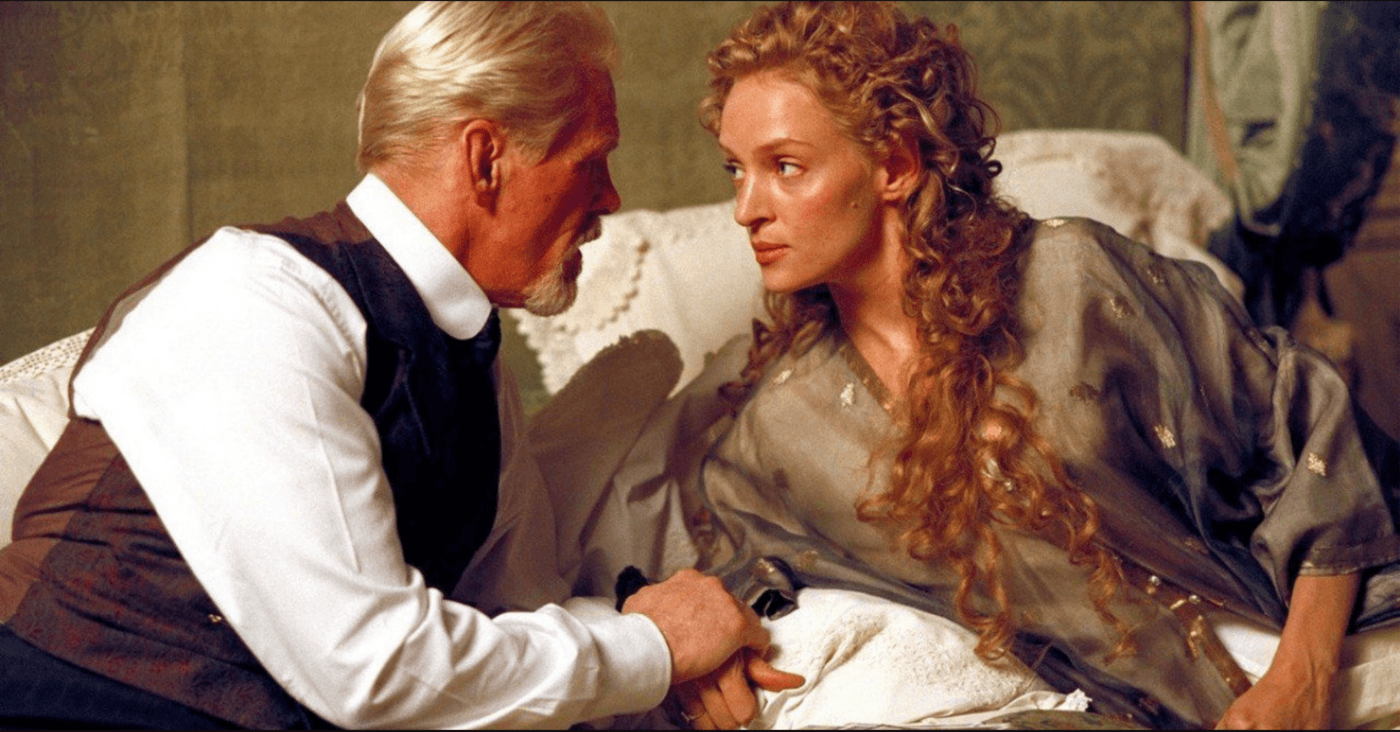
At the centre of it all are four people bound together by friendship, marriage, money, family loyalty, and desire: Maggie Verver, her enormously wealthy father Adam, Maggie’s husband Prince Amerigo, and Adam’s wife Charlotte Stant. James traps them inside an elegant social arrangement that initially looks almost perfect. The problem?
Like the golden bowl of the title, perfection can conceal a crack. And once you see the crack, you can never quite stop looking at it.
What Is The Golden Bowl About?
Maggie Verver is the daughter of Adam Verver, an extremely wealthy American businessman and art collector living largely in Europe. Father and daughter have an unusually close relationship, forming an almost self-contained emotional world.
Then Maggie marries Prince Amerigo, an Italian aristocrat with an impressive lineage but considerably less impressive finances.
It appears to be a mutually advantageous arrangement. Amerigo gains wealth and security, while Maggie gains the social prestige and romance associated with marrying a European prince. Yet Maggie does not know one rather important detail: Amerigo has a romantic history with her close friend Charlotte Stant.
Charlotte and Amerigo had once been lovers, but money—or rather the lack of it—stood between them. Neither possessed enough wealth to make marriage practical.
Now Amerigo has married Maggie. Charlotte remains unmarried. What could possibly go wrong? Quite a lot.
Maggie, worried that her father will be lonely now that she is married, encourages a relationship between Adam and Charlotte. Eventually, Adam marries her.
Suddenly, the four characters form two married couples:
Maggie and Amerigo. Adam and Charlotte.
The arrangement seems wonderfully convenient. Maggie keeps her beloved father close. Charlotte becomes part of the family. Everyone is wealthy, sophisticated, and connected.
Except Charlotte and Amerigo are now constantly within each other’s orbit.
Their former attraction has not disappeared.
And eventually, the past becomes dangerously present.
The Golden Bowl is therefore not really built around the question of whether betrayal occurs. The far more interesting question is what Maggie will do once she begins to understand the true nature of the relationships surrounding her.
The novel becomes a psychological chess match in which almost nobody admits that they are playing.
Penguin describes the book as an exploration of adultery, jealousy, and possession, as well as a continuation of James’s recurring fascination with American innocence confronting European experience.
But underneath all of that lies something even more unsettling: the possibility that intimacy depends partly upon what people agree not to know.

The Golden Bowl Itself: A Perfect Symbol of an Imperfect World
The object that gives the novel its title appears deceptively simple.
Before Amerigo’s marriage to Maggie, he and Charlotte visit a shop together and discover a beautiful gilded crystal bowl. It seems like an appropriate wedding gift, but there is a problem.
The bowl contains a flaw.
A crack.
It looks whole, precious, and beautiful, but its perfection is an illusion.
You hardly need a degree in literary criticism to see where James is going with this.
The bowl mirrors the relationships at the centre of the novel. Maggie’s marriage appears beautiful. Her father’s marriage appears successful. Their wealthy social world looks polished and enviable.
Yet something is fractured beneath the surface.
What makes the symbolism effective, however, is that the crack is not immediately obvious. You need to look carefully.
And that is precisely what Maggie learns to do.
At the beginning of the novel, she is comparatively innocent. Gradually, she becomes an observer. She notices inconsistencies. She reads gestures differently. She begins connecting details.
The bowl therefore becomes more than a symbol of a broken marriage. It represents knowledge itself.
Once Maggie discovers the flaw, she cannot return to the comfortable belief that the object was perfect.
Neither can she return to ignorance about her marriage.
Maggie Verver: Innocent or Master Manipulator?
Maggie is easily the most fascinating character in The Golden Bowl.
At first, she can appear sheltered, perhaps even naïve. She has grown up surrounded by enormous wealth and protected by her intense relationship with her father. She is not stupid, but she has not necessarily needed to become suspicious.
That changes.
As Maggie gradually realises what has happened between Charlotte and Amerigo, something remarkable occurs.
She does not explode. She does not dramatically confront everyone. She does not expose the affair.
Instead, she becomes strategic.
And this is where The Golden Bowl becomes much stranger and more compelling than an ordinary adultery novel.
Maggie learns how to manipulate the social arrangement around her without openly acknowledging what she knows. She understands that exposing the truth might destroy not only her marriage but her father’s happiness.
So she begins moving the pieces. Quietly.
The transformation is extraordinary because James refuses to make it morally simple. Is Maggie saving her marriage? Protecting her father? Defeating Charlotte? Controlling Amerigo?
Yes.
Possibly all of the above.
A modern reader may even find Maggie slightly frightening by the end. Her apparent innocence evolves into an extraordinary ability to understand other people’s motivations and influence their behavior.
She does not defeat her opponents by shouting louder.
She defeats them by seeing more.
This development has long been central to interpretations of the novel; critics have described the book in terms of Maggie’s emotional education and maturation as she learns to navigate an apparently impossible situation.
Charlotte Stant Deserves More Sympathy Than She Gets
It would be easy to cast Charlotte as the villain.
She has an affair with her friend’s husband, after all.
But Henry James is far too interested in moral ambiguity to give us such a comfortable interpretation.
Charlotte is in a precarious position from the beginning.
She is intelligent, attractive, socially capable—and relatively poor.
Money shapes almost everything that happens in The Golden Bowl. Amerigo could not originally marry Charlotte partly because neither possessed sufficient wealth. He marries Maggie, whose fortune removes that inconvenience. Charlotte later marries Adam, another enormously wealthy person.
Romantic relationships in the novel therefore exist within an economic structure.
People may love, desire, marry, and betray each other, but money is always sitting quietly at the dinner table.
Charlotte’s tragedy is that she becomes increasingly trapped inside arrangements controlled by the Ververs.
Maggie has money. Adam has money. Amerigo gains security through Maggie.
Charlotte, meanwhile, becomes increasingly vulnerable.
That does not absolve her of responsibility. James does not ask us to pretend that betrayal is harmless.
But he does make judgement uncomfortable.
And good novels often do exactly that.
Prince Amerigo: Lover, Opportunist, or Prisoner?
Prince Amerigo is equally difficult to categorise.
On the surface, he risks looking like a familiar literary figure: the charming European aristocrat who marries a wealthy American heiress.
But Amerigo is more complicated than a fortune hunter.
His attraction to Charlotte is genuine. His relationship with Maggie develops its own emotional complexity. He understands the transactional elements of his marriage, but that does not necessarily make his feelings false.
Amerigo also occupies an interesting position within one of James’s favourite themes: America versus Europe.
Maggie and Adam possess extraordinary wealth but comparatively little aristocratic heritage. Amerigo possesses exactly the opposite.
The marriage becomes an exchange.
American money meets European history.
New wealth purchases proximity to old prestige.
Yet James refuses to reduce either side to a caricature. American innocence is not necessarily morally superior, and European sophistication is not simply corruption. As the novel progresses, Maggie becomes increasingly capable of playing the sophisticated social game herself.
By the end, who exactly is innocent?
Perhaps nobody.
Adam Verver and the Strange Father-Daughter Relationship
One of the more uncomfortable aspects of The Golden Bowl is Maggie’s relationship with her father.
Nothing explicitly improper occurs between them, but their emotional intimacy is so intense that their marriages initially feel almost secondary to their bond with one another.
Maggie worries about abandoning Adam after marrying Amerigo. Her solution is effectively to bring another woman into their existing emotional system by encouraging Charlotte to marry him.
Rather than two couples naturally developing separate lives, the four characters remain tightly connected.
It creates an almost suffocating atmosphere. And that claustrophobia is essential.
There are technically two marriages, but emotionally there is one interconnected organism.
Pull one thread and everyone feels it.
The affair between Charlotte and Amerigo therefore threatens more than Maggie’s marriage. It threatens the entire structure the four have created.
A Novel About Everything Nobody Says
Perhaps the most remarkable feature of The Golden Bowl is how much of the novel depends upon silence.
Characters rarely say exactly what they mean.
They circle subjects.
They imply.
They observe.
They wait.
They interpret.
They deliberately misunderstand.
They allow other people to know that they know without ever actually confirming what everybody knows.
It sounds exhausting. Sometimes it is. But it is also brilliant.
A recent Oxford Academic discussion of the novel focuses precisely on this quality, arguing that James’s fascination with what is communicated without being spoken reaches an extraordinary level here. Maggie, in particular, must rearrange the relationships around her while avoiding explicit acknowledgment of the adultery.
This makes conversation in The Golden Bowl feel like fencing.
Nobody simply says, “I know what you did.”
Instead, a polite exchange about something apparently unrelated may carry the emotional weight of a confrontation.
James trusts the reader to notice.
Let’s Talk About Henry James’s Writing Style
There is no point pretending otherwise:
The Golden Bowl is difficult. Very difficult.
If your ideal prose resembles Hemingway, James may feel like someone took a simple sentence, placed it inside a maze, added three mirrors, locked the exit, and asked you to reconsider what you thought the sentence meant.
His late style is famously elaborate.
You might encounter an idea that could theoretically be expressed in ten words and discover James is still discussing it half a page later.
But there is a reason.
James is attempting to reproduce the instability of consciousness.
Sentences unfold through qualifications, interruptions, reversals, and subordinate clauses. Thoughts are examined from several angles before James allows them to settle—and sometimes they never settle at all.
We rarely think:
“I am jealous.”
We think:
“Of course I’m not jealous. Although it was rather strange that she said that. Not that it matters. Perhaps I misunderstood. Still, why would she…?”
That is closer to James.
His characters think around truths before they can think directly about them.
The novel’s notoriously intricate style has consequently been associated with later modernist explorations of consciousness, while James’s late works more broadly are now often regarded as important precursors to literary modernism.
RELATED:
Why the Slow Pace Actually Matters
Readers expecting plot twists every twenty pages may struggle.
Very little happens externally compared with the enormous amount happening psychologically.
A glance can occupy pages.
A suspicion can become an entire dramatic event.
A conversation can feel more dangerous than a duel.
But that slowness serves the novel.
James is not particularly interested in adultery as an event. He is interested in the mental consequences of adultery.
What happens when you suspect someone?
When does suspicion become knowledge?
Do you need proof?
What if acknowledging the truth would make your life worse?
Is silence cowardice—or strategy?
Those are the real events of The Golden Bowl.
Marriage as Possession
Possession runs through the novel in fascinating ways.
Adam Verver is an art collector.
He acquires beautiful objects.
He categorises them.
He preserves them.
He possesses them.
Against that background, marriage begins to look suspiciously like another form of collecting.
Amerigo brings aristocratic prestige into Maggie’s world. Charlotte brings beauty and companionship into Adam’s. Everyone appears to acquire something.
That makes the golden bowl even more significant.
But people are not objects. They have desires that resist ownership.
Much of the tragedy comes from characters attempting to preserve relationships as though they were precious objects in a collection.
Human beings, unfortunately, refuse to remain neatly behind glass.
Wealth Cannot Buy Emotional Security
The Ververs have enough money to solve almost any practical problem.
And yet they cannot purchase certainty.
That irony gives the novel much of its power.
Adam can collect priceless art. Maggie can marry a prince.
It is an object admired for its beauty and potential value.
They can surround themselves with beauty and comfort.
None of it prevents jealousy, desire, betrayal, or fear.
Money can construct the stage, but it cannot control the actors.
James repeatedly reminds us that enormous privilege does not eliminate human vulnerability. If anything, wealth creates the conditions that allow this strange four-person arrangement to exist.
Their lives are materially luxurious and emotionally precarious.
The contrast is delicious.

Book Review: The Mysteries of Udolpho by Ann Radcliffe

Book Review: The Scapegoat by Daphne du Maurier

Book Review: Gerald’s Game by Stephen King
The Psychology Is Where the Novel Becomes Extraordinary
This is where The Golden Bowl earns its reputation.
James understands something uncomfortable about human beings: we often prefer ambiguity to painful certainty.
His characters constantly manage information.
They know things partially.
They avoid confirming suspicions.
They preserve appearances.
They protect others by deceiving them.
They protect themselves by pretending not to understand.
And eventually the distinction between kindness and manipulation becomes almost impossible to locate.
Maggie’s behaviour illustrates this perfectly.
She does not simply discover betrayal and demand justice. She asks herself what knowledge will accomplish.
Would telling Adam help him?
Would exposing Charlotte save anything?
Would confronting Amerigo restore trust?
Or would disclosure merely destroy everyone?
Suddenly honesty is not automatically virtuous.
Silence is not automatically cowardly.
That moral uncertainty makes the book feel surprisingly modern.
What Doesn’t Work So Well?
Even masterpieces can test your patience. And The Golden Bowl will absolutely test it.
The biggest obstacle is James’s prose.
There are moments when psychological subtlety becomes psychological over-analysis. A relatively straightforward emotional realisation can take so long to unfold that you may forget where the thought began.
The limited cast also creates an intentionally claustrophobic feeling. The four principal characters dominate almost everything, making their emotional world seem strangely sealed off from ordinary life.
Some readers will find that mesmerising.
Others may want to open a window.
The symbolism can occasionally feel heavy as well. Once you understand what the cracked golden bowl represents, James is not exactly hiding the metaphor in a locked cupboard.
But these weaknesses are closely connected to the novel’s strengths.
Its density creates its psychological precision.
Its claustrophobia creates its tension.
Its symbolism gives physical form to otherwise invisible fractures.
You cannot easily separate one from the other.
Who Should Read The Golden Bowl?
This is not the Henry James novel I would necessarily recommend to a complete beginner.
If you have never read James before, something like Daisy Miller, Washington Square, The Turn of the Screw, or The Portrait of a Lady may provide a gentler introduction.
The Golden Bowl asks for patience.
Lots of it.
But readers who enjoy psychological fiction, morally ambiguous characters, marriage plots, literary modernism, unreliable perceptions, social maneuvering, and novels where the greatest battles happen inside people’s heads may find it extraordinary.
If you enjoy Edith Wharton, Virginia Woolf, George Eliot, Marcel Proust, or slow-burning psychological fiction in general, there is plenty here to admire.
Just don’t rush it.
James will win.
Is The Golden Bowl Still Worth Reading Today?
Absolutely—but not because it is an easy classic to admire politely.
It remains interesting because its central problem is timeless.
How much truth can a relationship survive?
We like to imagine that healthy relationships require complete honesty. James complicates that comforting assumption.
Sometimes his characters preserve relationships through silence.
Sometimes they manipulate others through kindness.
Sometimes they behave selfishly while convincing themselves they are being generous.
Sometimes they protect people by denying them knowledge.
That is far messier than a simple story about innocent spouses and guilty adulterers.
And far more human.
The novel also captures the strange politics of intimate relationships. Every relationship contains negotiations about attention, loyalty, dependence, power, and freedom.
James simply places those negotiations under a microscope.

Conclusion
More than a century after its publication, The Golden Bowl remains an intimidating but deeply rewarding novel. Henry James takes four privileged people, places them inside an apparently perfect arrangement, introduces one concealed fracture, and watches the psychological consequences spread.
What emerges is not merely a novel about adultery. It is a story about perception, silence, possession, wealth, family, marriage, and the dangerous moment when innocence turns into knowledge.
Maggie’s greatest transformation is not that she discovers the truth.
It is that she learns what to do with it.
And James leaves us with a wonderfully uncomfortable question: if a relationship survives because certain truths remain unspoken, has it really been saved—or has everyone simply learned how to live around the crack?
FAQs
Did you like it? Pin this post for later!