



Disclaimer
This post may contain affiliate links. I will make a small commission if you make a purchase through one of these links, at no extra cost to you. See full disclosure and disclaimer policy HERE.

Money can buy comfort, security, beautiful houses, expensive holidays, and the kind of freedom most people can only dream about. But can it buy morality? Apparently, not always. In fact, some of literature’s wealthiest characters have managed to turn having everything into an extraordinary talent for being absolutely insufferable.
There’s something fascinating about rich people in fiction. They throw extravagant parties, collect priceless possessions, manipulate entire families, and occasionally destroy someone’s life before breakfast. Meanwhile, the people around them struggle to pay rent, survive impossible working conditions, or simply get a fair chance. And the most infuriating part? The wealthy characters rarely seem to think they’re doing anything wrong.
If you’ve ever watched someone inherit a fortune and immediately develop a personality disorder, this reading list is for you.
These ten books explore the darker side of wealth, privilege, greed, exploitation, and social inequality. Some expose the corruption hiding behind luxurious lifestyles, while others examine how money gives certain people the power to escape consequences that would ruin everyone else.
So, if you’re ready to question the morality of extreme wealth, here are ten books that might make you look at billionaires, aristocrats, and inherited fortunes a little differently.
1. The Great Gatsby by F. Scott Fitzgerald
If there’s one novel that proves having money doesn’t necessarily make you interesting, decent, or even happy, it’s The Great Gatsby.
Set during the extravagant Jazz Age of the 1920s, the novel follows Jay Gatsby, a mysterious millionaire who throws spectacular parties in the hope of attracting the attention of Daisy Buchanan, a woman he loved years earlier. Gatsby has everything money can buy, or at least everything he believes he needs. But his fortune cannot purchase the one thing he desperately wants: a place in Daisy’s world.
And Daisy’s world is precisely where the problem begins.
Daisy and her husband, Tom Buchanan, represent the old-money aristocracy. They have inherited wealth, social status, and the kind of privilege that allows them to move through life without worrying about the consequences of their actions. Tom is arrogant, unfaithful, and openly prejudiced, while Daisy’s apparent charm conceals a remarkable capacity for emotional irresponsibility.
The novel’s most infuriating observation comes through Nick Carraway, who describes Tom and Daisy as people who destroy things and then retreat into their money, leaving others to deal with the damage.
Fitzgerald isn’t simply criticising rich people for having expensive cars and enormous houses. He’s exposing a social system in which inherited privilege protects the careless, while everyone else pays the price.
Why it will make you hate rich people: Because some people don’t need to be good, responsible, or even particularly intelligent to get away with everything. They just need enough money to avoid the consequences.

RELATED:
2. The House of Mirth by Edith Wharton
What happens when a woman’s entire social value depends on her ability to marry someone wealthy?
Edith Wharton’s The House of Mirth offers a rather depressing answer.
Published in 1905, the novel follows Lily Bart, a beautiful young woman from a respectable but financially declining family. Lily belongs to New York’s upper social circles, where appearances are everything and marriage is often treated as a financial transaction disguised as romance.
She understands the rules of her world. A wealthy husband would secure her future, preserve her social standing, and allow her to maintain the lifestyle she’s accustomed to. Unfortunately, Lily repeatedly makes decisions that conflict with the expectations of the society she inhabits.
Her beauty attracts attention, but without independent wealth, she remains financially vulnerable. Her acquaintances judge her, manipulate her, and ultimately abandon her when she becomes inconvenient.
What’s particularly interesting is that Wharton doesn’t portray this world as a collection of cartoon villains. Many of its characters are perfectly respectable by conventional standards. They simply participate in a system that rewards wealth, punishes vulnerability, and treats human relationships as investments.
Lily’s tragedy is that she recognises the cruelty of her environment but struggles to escape it without sacrificing her identity.
Why it will make you hate rich people: Because Wharton demonstrates how an entire social class can maintain its privileges by making everyone else compete for acceptance. Even love becomes a luxury reserved for those who can afford it.

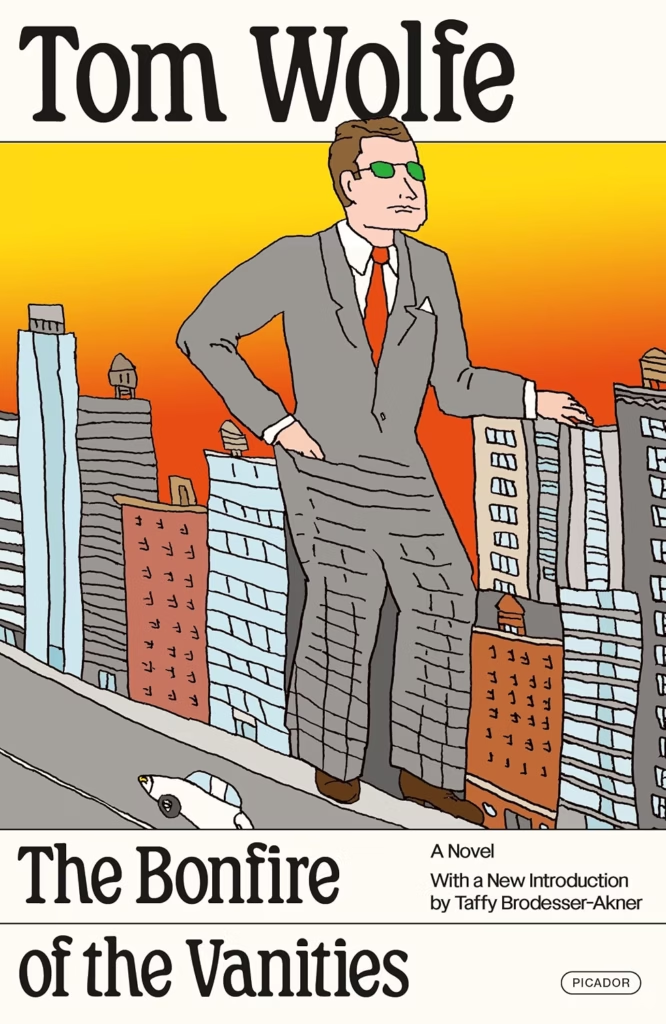
3. The Bonfire of the Vanities by Tom Wolfe
Imagine a world where being rich means having your own version of reality, complete with lawyers, public relations experts, political connections, and people willing to protect you from inconvenient truths.
Welcome to The Bonfire of the Vanities.
Tom Wolfe’s 1987 satirical novel takes readers into the world of 1980s New York, where Wall Street wealth, social ambition, racial tensions, and political opportunism collide.
At the centre of the story is Sherman McCoy, a wealthy investment banker who considers himself a master of the universe. He has a luxurious apartment, an expensive lifestyle, and a comfortable marriage. He also has a mistress and a rather inflated opinion of his own importance.
Everything begins to unravel after an incident in the Bronx involving a hit-and-run accident. What follows is a spectacular examination of how wealth, influence, media attention, and political ambition shape the pursuit of justice.
McCoy initially believes that his money and social connections will protect him. And, to a certain extent, he’s right. But the novel also reveals how quickly powerful people can become vulnerable when their carefully constructed public image collapses.
Wolfe’s satire is particularly sharp because he doesn’t spare anyone. Wall Street executives, journalists, politicians, lawyers, and social climbers all get their share of ridicule.
Why it will make you hate rich people: Because it shows how the wealthy can treat the world like their personal playground, assuming that the rules are designed for everyone else.
4. The Grapes of Wrath by John Steinbeck
Some books make you angry at individual characters. Others make you angry at an entire economic system. The Grapes of Wrath manages to do both.
Published in 1939, John Steinbeck’s masterpiece follows the Joad family, poor tenant farmers forced to leave Oklahoma during the Dust Bowl migration. Having lost their land, they travel to California in search of work and the possibility of a better life.
What they discover is far from the promised paradise.
California is full of struggling migrant workers, desperate families, and people willing to accept almost any wage to survive. Meanwhile, large landowners and agricultural corporations maintain their power by exploiting this desperation.
Steinbeck exposes the cruelty of an economic structure in which food can be destroyed to maintain prices while families starve. Workers are treated as disposable, poverty becomes a source of profit, and those who own the land have little incentive to care about the people working it.
The novel is especially powerful because it doesn’t rely on exaggerated villains. Its real antagonist is a system in which individual suffering becomes an acceptable cost of doing business.
And that’s what makes it so uncomfortable. The Joads aren’t asking for mansions or luxury cars. They want work, food, shelter, and the opportunity to live with dignity.
Apparently, even that is too much to ask.
Why it will make you hate rich people: Because Steinbeck exposes the grotesque contradiction of a society capable of producing enormous wealth while allowing ordinary families to starve.

RELATED:
5. American Psycho by Bret Easton Ellis
What if wealth, status, and consumerism became someone’s entire personality?
Patrick Bateman, the protagonist of American Psycho, might be the most disturbing answer to that question.
Published in 1991, Bret Easton Ellis’s controversial novel follows a wealthy investment banker living in Manhattan during the late 1980s. Bateman is obsessed with designer clothing, expensive restaurants, luxury apartments, exclusive clubs, and maintaining the perfect physical appearance.
He is also a deeply violent individual.
The novel combines psychological horror with vicious social satire. Bateman’s obsession with appearances becomes increasingly grotesque, while the people surrounding him seem almost incapable of recognising anything beyond wealth, status, and fashionable accessories.
One of the most disturbing aspects of the story is how interchangeable the characters become. They confuse one another’s identities, compete over business cards, and measure their worth through possessions.
Even when Bateman describes horrific acts, the world around him remains strangely indifferent.
Ellis uses this absurdity to expose the emptiness of a culture in which material success has replaced almost every other measure of human value.
It’s worth noting that the novel contains graphic violence and disturbing sexual content, so it certainly isn’t a comfortable read.
Why it will make you hate rich people: Because it presents a world in which having the right business card matters more than having a conscience, and where human beings become little more than accessories to an expensive lifestyle.

6. The Remains of the Day by Kazuo Ishiguro
Not every story about wealth involves billionaires throwing champagne parties or aristocrats behaving like professional villains. Sometimes, the most revealing stories take place behind the doors of enormous country estates.
In The Remains of the Day, Kazuo Ishiguro explores the relationship between wealth, power, loyalty, and moral responsibility through the eyes of Stevens, an English butler who has devoted his life to serving an aristocratic household.
The novel takes place in post-war England, with Stevens reflecting on his years of service at Darlington Hall. His former employer, Lord Darlington, was an aristocrat who became involved in political activities connected to Nazi Germany before the Second World War.
Stevens remembers his employer with admiration, emphasising his dedication to duty and public service. Yet, as the narrative unfolds, readers gradually discover the moral failures hidden beneath Lord Darlington’s respectable reputation.
The novel raises an uncomfortable question: what happens when loyalty to a powerful person becomes more important than recognising wrongdoing?
Although Lord Darlington is not portrayed as a simple villain, his story demonstrates how inherited status and social authority can create an environment in which dangerous decisions are treated as respectable simply because they come from influential people.
It’s a quieter criticism of privilege, but perhaps a more unsettling one.
Why it will make you hate rich people: Because Ishiguro shows how wealth and social standing can disguise moral incompetence, while those serving the powerful may become complicit in their mistakes.

7. The House of the Spirits by Isabel Allende
If you want a novel that explores the relationship between wealth, political power, class divisions, and generational privilege, The House of the Spirits deserves a place on your reading list.
Isabel Allende’s 1982 novel follows several generations of the Trueba family in an unnamed Latin American country strongly reminiscent of Chile. At its centre is Esteban Trueba, a wealthy landowner whose ambition, authoritarian personality, and desire for control shape the lives of everyone around him.
Esteban builds his fortune through land ownership and agricultural production. But his wealth comes with an enormous sense of entitlement. He expects obedience from workers, authority over his family, and respect from a society he believes should recognise his superiority.
The novel explores the enormous distance between wealthy landowners and the rural workers whose labour sustains their fortunes.
As political tensions intensify, the family becomes increasingly entangled in the struggle between conservative elites and those demanding social change.
What makes the book particularly compelling is that it doesn’t reduce social inequality to a simple conflict between good and evil. Instead, it examines how privilege becomes embedded in family traditions, political institutions, and everyday relationships.
Esteban is not merely a wealthy man with an unpleasant personality. He represents a system in which economic power becomes political influence and personal authority.
Why it will make you hate rich people: Because Allende illustrates how generations of privilege can normalize exploitation, making inequality appear like an inevitable part of society rather than something human beings have created.

RELATED:
8. The Great Alone by Kristin Hannah
Sometimes, the problem with rich people isn’t simply that they have too much money. It’s that the world has convinced them they’re entitled to everything, including the lives and futures of other people.
Although The Great Alone isn’t exclusively about wealthy elites, it offers a compelling look at power, social divisions, and the vulnerability of people without financial security.
Set in Alaska during the 1970s, Kristin Hannah’s novel follows the Allbright family as they move to a remote community in search of a fresh start. Ernt Allbright, a former prisoner of war struggling with the psychological aftermath of Vietnam, brings his wife Cora and daughter Leni into an isolated environment where survival depends on self-reliance and community.
As the family attempts to adapt to their new surroundings, Leni discovers the complicated realities of poverty, dependence, and relationships shaped by unequal power.
The novel’s treatment of economic vulnerability is particularly relevant. When people lack financial independence, escaping destructive situations becomes considerably harder. Having nowhere to go and no money to start again can turn what should be a personal choice into a matter of survival.
This is not a conventional anti-rich novel, but it offers an important reminder that financial insecurity can make people extraordinarily vulnerable to those who control their circumstances.
Why it will make you hate rich people: Because it reminds us that financial independence isn’t merely about buying nice things. It’s about having the freedom to make choices, leave dangerous situations, and build a life without depending on someone else’s goodwill.

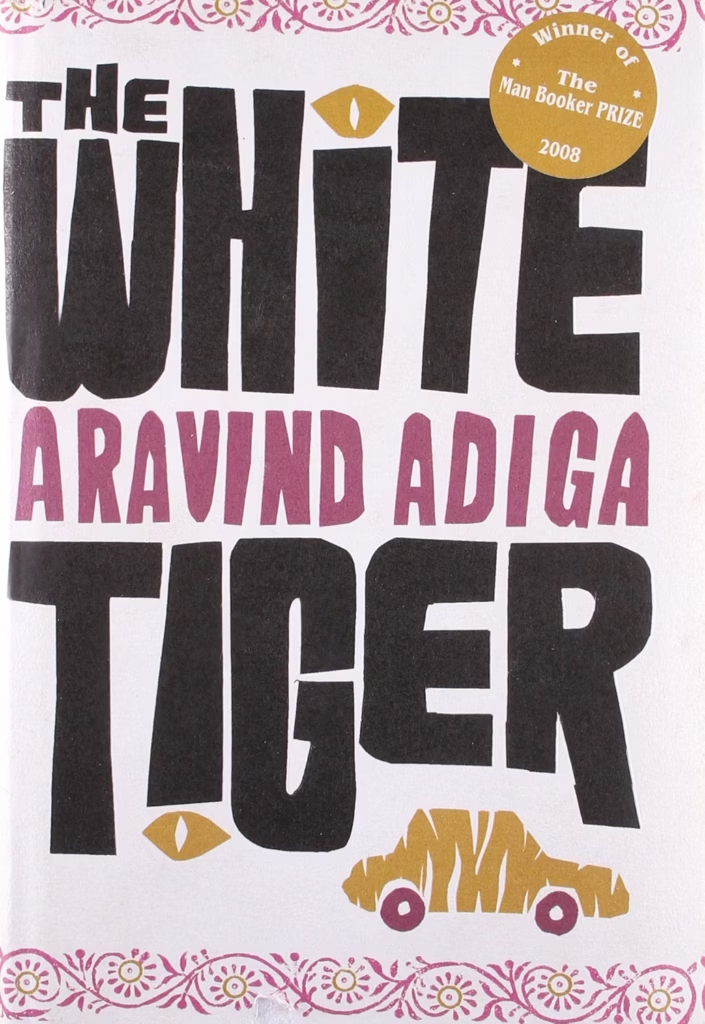
9. The White Tiger by Aravind Adiga
What if the only way to escape poverty was to become the very thing you despise?
Aravind Adiga’s The White Tiger, winner of the 2008 Man Booker Prize, offers a brutally entertaining look at India’s class system, economic inequality, and the moral compromises involved in the pursuit of wealth.
The novel follows Balram Halwai, a young man born into poverty in rural India who eventually becomes a successful entrepreneur in Bangalore. But his journey from village poverty to financial success is anything but conventional. Working as a chauffeur for a wealthy family, Balram gets an intimate look at the privileges, hypocrisy, and corruption that define India’s upper classes.
He quickly discovers that the wealthy operate according to an entirely different set of rules. They exploit workers, manipulate the legal system, and use their money to escape accountability. Meanwhile, people like Balram are expected to remain obedient, grateful, and invisible.
But Balram isn’t interested in remaining invisible forever.
Told through a series of letters to a Chinese political leader, the novel combines dark humour, social criticism, and an increasingly disturbing exploration of ambition. Its central character is neither a conventional hero nor a simple victim. He’s intelligent, resourceful, ruthless, and willing to do terrible things to escape the circumstances into which he was born.
That’s precisely what makes the novel so compelling. Adiga doesn’t offer a comforting story in which the poor overcome injustice through hard work and honesty. Instead, he asks whether a deeply unequal society leaves people with any genuinely ethical route to success.
Why it will make you hate rich people: Because it exposes a world where the wealthy can afford to be corrupt while the poor are expected to remain honest, obedient, and grateful for whatever scraps they’re given.
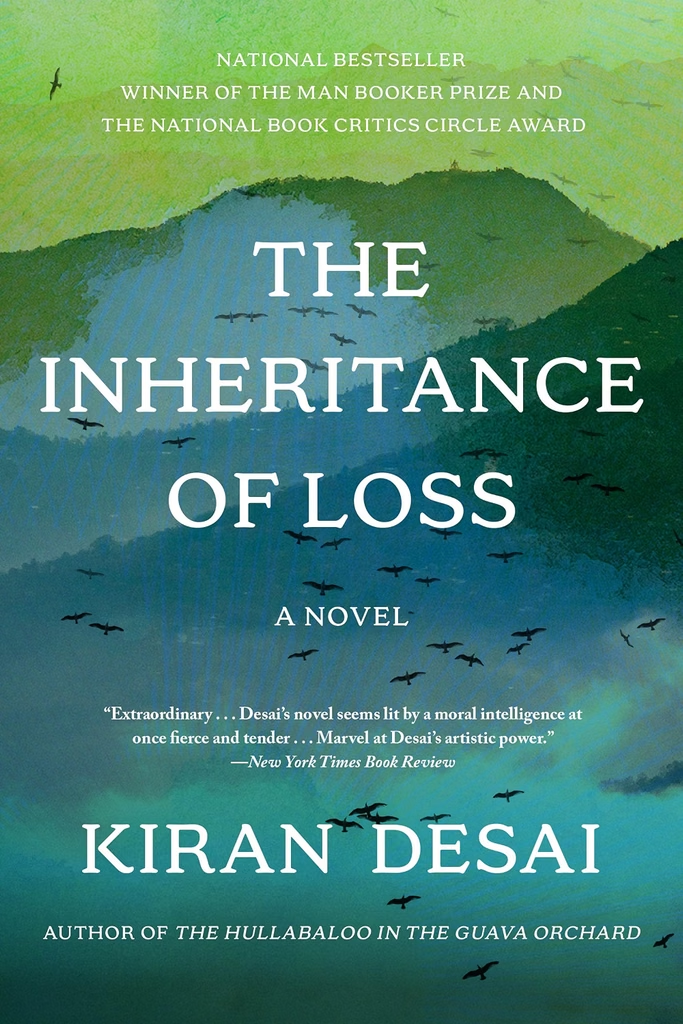
10. The Inheritance of Loss by Kiran Desai
Money, social status, colonial privilege, and the desire to belong. Kiran Desai’s The Inheritance of Loss brings all these uncomfortable subjects together in a beautifully written novel about inequality and identity.
Winner of the 2006 Man Booker Prize, the novel moves between Kalimpong in the Indian Himalayas and New York, following characters whose lives are shaped by class divisions, colonial history, and economic opportunity.
One of its central characters is Jemubhai Patel, a retired judge who lives in relative isolation in an old mansion. Educated in England, he has spent much of his life struggling with his identity, internalised colonial attitudes, and a deep sense of social superiority. His granddaughter, Sai, lives with him, while their cook remains responsible for maintaining the household.
Meanwhile, the cook’s son, Biju, struggles to survive as an undocumented immigrant in New York, moving between poorly paid restaurant jobs and increasingly precarious living conditions.
The contrast between these characters reveals the uncomfortable realities of global inequality. While some people inherit property, education, and social connections, others must cross continents simply to find work that allows them to survive.
Desai also explores the psychological consequences of colonialism, showing how people who have internalised social hierarchies can reproduce the very inequalities that once oppressed them.
It’s not a straightforward story about evil billionaires or extravagant lifestyles. Its criticism of privilege is subtler, examining the inherited attitudes and social structures that determine who gets opportunities and who remains trapped outside them.
Why it will make you hate rich people: Because it reminds us that privilege isn’t always about having a billion euros in the bank. Sometimes it’s about inheriting the right passport, education, connections, and opportunities while others spend their entire lives trying to obtain even a fraction of them.

Conclusion: Maybe Money Isn’t the Problem. Maybe It’s What People Do With It.
These books offer very different perspectives on wealth and privilege. Some examine inherited fortunes and aristocratic entitlement, others explore capitalism, exploitation, political influence, and the psychological consequences of living in a society obsessed with material success.
But they share an uncomfortable observation: money doesn’t exist in a vacuum. It can influence relationships, shape institutions, determine opportunities, and protect people from consequences that would be unavoidable for everyone else.
Of course, being wealthy doesn’t automatically make someone selfish, corrupt, or morally bankrupt. And poverty certainly doesn’t guarantee virtue. The problem arises when financial power becomes a substitute for accountability, when privilege is mistaken for personal merit, and when other people’s suffering becomes an acceptable price for maintaining a comfortable lifestyle.
Perhaps that’s the real reason these stories are so infuriating. They don’t simply ask us to dislike rich characters. They encourage us to question the systems that allow some people to accumulate extraordinary power while others struggle to meet their most basic needs.
So, the next time someone tells you that money can’t buy happiness, remember that it can certainly buy a very good lawyer, a spectacular mansion, and, occasionally, an escape route from accountability.
And that might be an even bigger problem.
FAQs
Did you like it? Pin this post for later!


