Disclaimer
This post may contain affiliate links. I will make a small commission if you make a purchase through one of these links, at no extra cost to you. See full disclosure and disclaimer policy HERE.

Some writers tell you a story. Others quietly rearrange the furniture inside your head. Ian McEwan belongs firmly in the second category.
You may know him as the author of Atonement, perhaps because you read the novel, watched the film adaptation, or simply remember that famous green dress and the devastating consequences of one terrible misunderstanding. But reducing McEwan to Atonement is a little like reducing Virginia Woolf to Mrs Dalloway. It gives you the masterpiece, perhaps, but not the full picture.
Across a career spanning decades, McEwan has written about desire, guilt, jealousy, science, marriage, politics, morality, childhood, ageing, artificial intelligence, war, climate change, and the strange little lies we tell ourselves simply to make life bearable.
And yet his books rarely feel overloaded.
Instead, they often begin with something deceptively ordinary: a dinner, a walk, a wedding night, a family gathering, a child disappearing in a supermarket. Then something shifts. Sometimes it happens within a sentence. Suddenly, the comfortable world you thought you understood has cracked open.
That is the McEwan experience.
So, if you have never read him—or if you have only read Atonement—here is why Ian McEwan deserves a much larger space on your bookshelf.
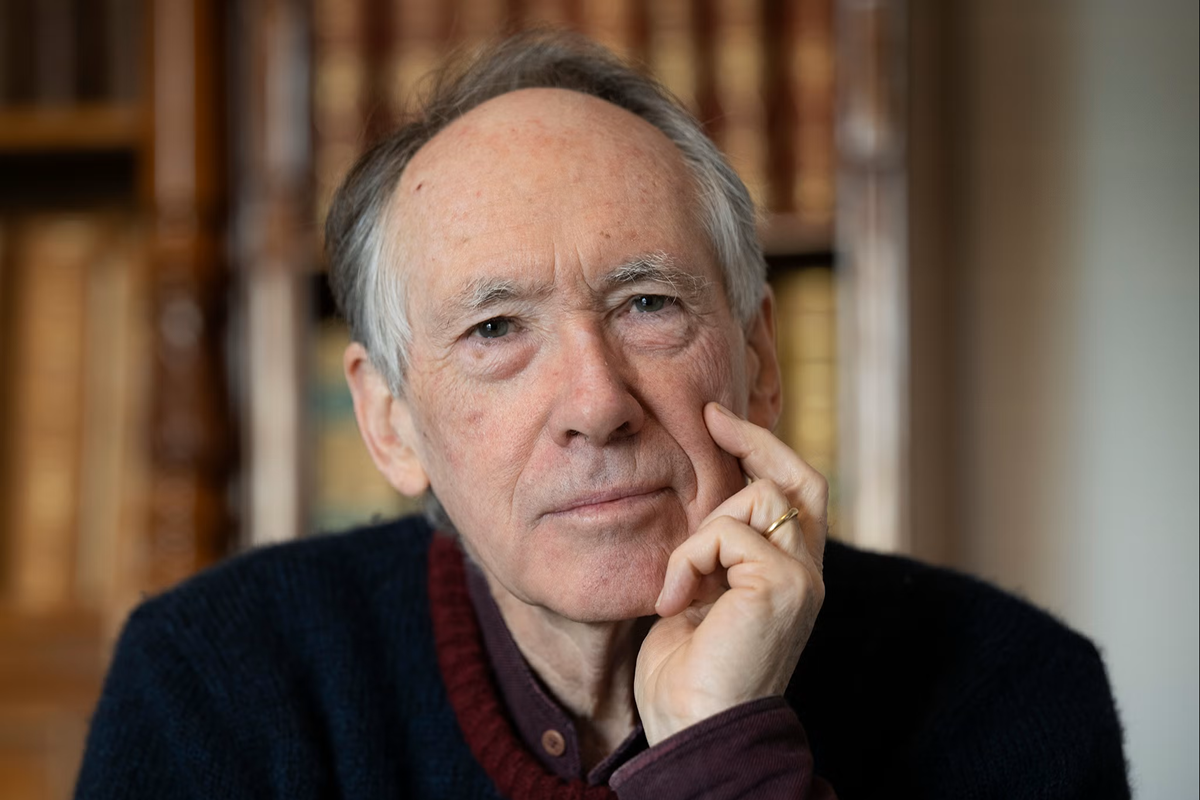
Who Is Ian McEwan?
Ian McEwan is an English novelist and short-story writer who emerged onto the British literary scene in the 1970s. His earliest fiction quickly earned him a reputation for being unsettling, psychologically dark, and occasionally downright disturbing.
And that reputation was deserved.
Early collections such as First Love, Last Rites and In Between the Sheets explored sexuality, obsession, violence, dysfunctional families, and the darker corners of human psychology. This was not polite drawing-room fiction. McEwan seemed fascinated by what happened when respectable surfaces were peeled away.
His early work was so macabre that he acquired the nickname “Ian Macabre.”
But something interesting happened as his career developed.
McEwan didn’t exactly become less interested in darkness. Instead, his canvas expanded. Politics entered the picture. So did science, history, ethics, marriage, parenthood, religion, technology, and social responsibility.
The disturbing young writer gradually became one of the major chroniclers of modern British life.
His novels have received numerous major literary honors, and Amsterdam won the Booker Prize in 1998. Yet prizes alone don’t explain his appeal.
The real reason to read McEwan is much simpler: he understands that catastrophe often begins with something very small.
A misunderstanding. A decision. A lie. A few minutes of hesitation.
And once the first domino falls, you cannot always put it back.
McEwan Understands the Terrifying Power of Small Decisions
Imagine looking back at your life and identifying the exact moment everything changed.
Perhaps you said something you shouldn’t have said. Perhaps you stayed silent when you should have spoken. Perhaps you interpreted something incorrectly.
McEwan loves these moments.
His novels frequently turn upon seemingly insignificant decisions that produce enormous consequences. That’s one reason his stories can feel almost unbearably tense even when very little is physically happening.
Atonement is the obvious example.
A young girl witnesses events she doesn’t fully understand. She constructs a story around them. That story becomes an accusation, and the accusation changes several lives forever.
The horror comes partly from how believable it is.
There is no supernatural monster lurking behind the curtain. The monster is interpretation.
McEwan repeatedly reminds us that human beings don’t experience reality objectively. We create narratives around what we see. We fill gaps. We assume motives. We remember selectively.
And sometimes those stories become more powerful than the truth.
His Characters Are Rarely Simply Good or Bad
If you like characters who can easily be divided into heroes and villains, McEwan may occasionally frustrate you.
If you like morally complicated people, however, you’re in excellent hands.
His characters make terrible decisions for understandable reasons. They behave selfishly and then surprise you with tenderness. They rationalise their actions. They misunderstand themselves.
In other words, they behave like people.
McEwan rarely seems interested in asking, “Is this person good?”
His more interesting question is: “How did this person convince themselves that what they were doing was reasonable?”
That’s where things become uncomfortable.
Because the answer is often disturbingly familiar.
We all narrate ourselves as the protagonists of our lives. Few people wake up thinking, “Today I shall be the villain.” Instead, we justify, explain, minimise, reinterpret.
McEwan is exceptionally good at exposing that machinery.
Read Ian McEwan If You Love Psychological Fiction
McEwan doesn’t simply describe what characters do. He takes you inside the mental processes that allow them to do it.
That distinction matters.
His novels frequently operate at the intersection of action and consciousness. A relatively simple event can occupy pages because the real drama is happening inside someone’s mind.
Jealousy grows. Fear mutates. Memory changes shape.
A rational person begins constructing increasingly irrational explanations.
And because McEwan writes these processes with such precision, you often understand a character’s disastrous decision before the character understands it themselves.
That creates a peculiar kind of suspense.
You aren’t necessarily wondering what will happen.
You’re wondering whether the character will realise what they’re doing before it’s too late.
Often, they won’t.
His Prose Is Precise Without Feeling Sterile
McEwan’s writing is controlled. Very controlled.
He doesn’t usually throw language onto the page in wild, extravagant bursts. His sentences often feel carefully engineered, almost architectural. Everything has a purpose.
Yet his prose can also be intensely sensual.
Food, bodies, weather, rooms, landscapes, clothing, music—physical details matter because they anchor his philosophical questions in actual experience.
Consider Atonement. Its emotional world depends partly on physical sensations: oppressive summer heat, water, fabric, flowers, dust, bodies moving through rooms.
The details aren’t merely decorative. They create pressure.
McEwan understands something great stylists understand instinctively: atmosphere isn’t wallpaper. Atmosphere changes how characters behave.
Heat makes people restless. Silence becomes threatening. A room can become claustrophobic. A beautiful landscape can make violence seem even more grotesque.
His prose may look elegant on the surface, but there is frequently something dangerous moving underneath it.
He Is Fascinated by the Stories We Tell Ourselves
One of McEwan’s most persistent subjects is storytelling itself.
Who controls a story? Can fiction reveal truth? Can it distort truth? Can imagination become morally dangerous? Can storytelling repair harm?
These questions dominate Atonement, but they appear throughout his work in different forms.
McEwan’s characters constantly interpret reality. They turn experiences into explanations, and explanations into personal myths.
That makes his fiction particularly fascinating in an age when almost everyone is continuously narrating themselves.
Think about social media. We curate our lives. We choose photographs. We write captions. We decide which experiences belong in the story and which ones disappear.
McEwan was exploring that instinct long before Instagram existed.
His fiction asks an uncomfortable question: How much of what you believe about your own life is actually memory—and how much is editing?
His Novels Explore Love Without Romanticising It
McEwan writes about love constantly, but he isn’t particularly sentimental about it.
Love in his fiction can be tender, obsessive, erotic, selfish, loyal, destructive, mundane, or absurd.
Sometimes all at once.
In On Chesil Beach, for example, love collides with sexual anxiety, embarrassment, social expectations, and an almost catastrophic inability to communicate.
There is something painfully recognisable about it.
Two people can love each other and still fail each other.
That idea appears repeatedly in McEwan’s fiction.
Love doesn’t automatically create understanding. Intimacy doesn’t guarantee communication. Good intentions don’t necessarily prevent damage.
His romantic relationships are therefore rarely fantasies. They are negotiations between two separate consciousnesses, each carrying its own fears, memories, expectations, and blind spots.
That makes them feel painfully human.
He Can Make Ordinary Life Feel Suspenseful
McEwan understands anticipation.
He knows that sometimes the most frightening moment isn’t the explosion. It’s the five minutes before it.
Take Saturday.
Much of the novel follows neurosurgeon Henry Perowne through a single day in London. On paper, that premise hardly screams thriller.
Yet tension gradually accumulates.
Domestic life, politics, violence, medicine, privilege, fear, and chance begin intersecting until the ordinary day feels increasingly fragile.
That’s one of McEwan’s greatest strengths.
He can make civilisation itself seem like a thin sheet of glass. We have homes, careers, routines, marriages, dinner plans.
Everything feels stable. Until it isn’t.
His Books Ask Big Questions Without Becoming Philosophy Lectures
McEwan is deeply interested in ideas.
What makes us moral?
Does religion help us understand suffering?
Can science explain consciousness?
What responsibilities do parents have toward children?
What happens when technological progress outruns ethical understanding?
How much freedom do we actually possess?
These are enormous questions.
Yet McEwan usually embeds them inside stories rather than presenting them as abstract arguments.
Machines Like Me, for instance, uses an alternative-history scenario involving artificial intelligence to explore consciousness, morality, truth, jealousy, and human exceptionalism.
The premise sounds futuristic. The emotional problems aren’t.
Humans create intelligent machines and then discover that intelligence may be easier to engineer than moral ambiguity.
Suddenly, the machine isn’t the strangest creature in the room. We are.
McEwan Is Particularly Good at Writing Guilt
Few emotions are as fertile for literature as guilt.
Guilt changes memory. It creates alternative histories.
“If only I’d…”
“What if I hadn’t…”
“I should have…”
McEwan understands the endless grammar of regret.
His characters frequently become trapped between what happened and what might have happened.
This is perhaps most obvious in Atonement, where guilt becomes an entire architecture around which a life is constructed.
But similar patterns appear elsewhere.
McEwan’s characters revisit moments, reinterpret them, and attempt to negotiate with the past.
Of course, the past doesn’t negotiate. That’s the tragedy.
His Fiction Often Shows How Fragile Civilisation Really Is
Dinner parties. Concert halls. Universities. Hospitals. Courtrooms. Comfortable London homes.
McEwan frequently places his characters inside the institutions of educated, prosperous society.
Then he introduces disorder. Violence enters. Bodies fail. Political tensions intrude. Desire overrides reason. Chance ignores carefully made plans.
The effect is fascinating because McEwan’s world is usually recognisable and orderly. When something disrupts that order, the disruption feels especially powerful.
It’s like seeing a crack appear across a perfectly polished mirror.
You suddenly realise how thin the surface always was.
His Books Reward Rereading
The first time you read a McEwan novel, you follow the story. The second time, you notice the machinery.
A seemingly innocent detail suddenly looks suspicious. A character’s assumption reveals itself as unreliable. An early conversation quietly predicts something devastating. A structural decision acquires new meaning.
This is especially true of novels such as Atonement, where form and theme are intimately connected.
McEwan is rarely careless with information.
If something seems oddly specific, remember it. It may matter later.
The Best Ian McEwan Books for Beginners
1. Atonement
McEwan’s masterpiece follows a young girl whose misunderstanding and false accusation alter several lives forever. Beautiful, tragic, and morally complex, Atonement is the best place to start with his work.

RELATED:
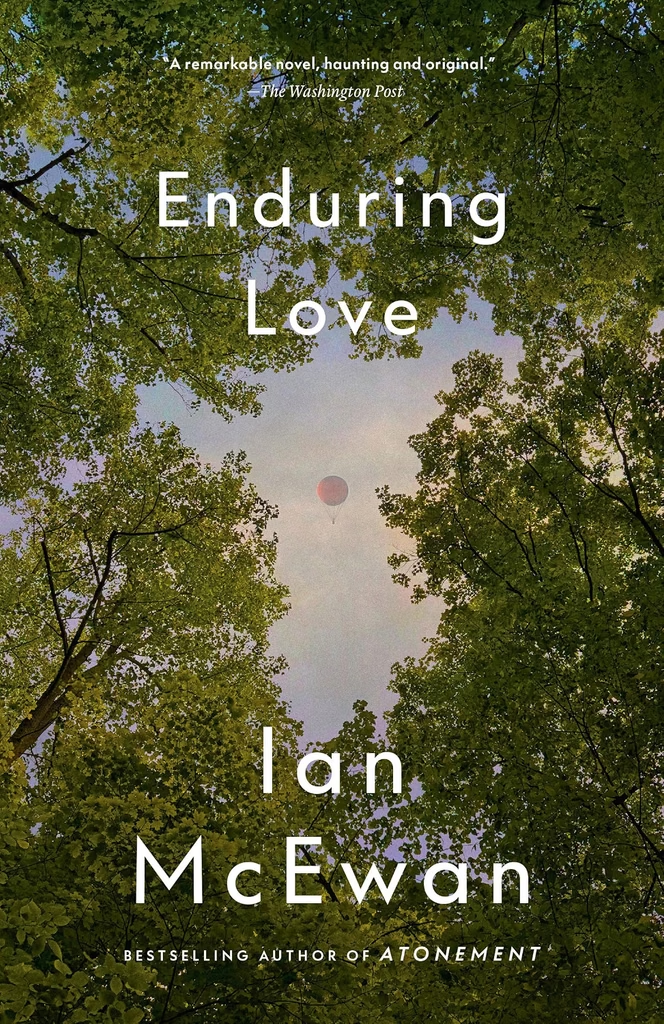
2. Enduring Love
After witnessing a tragic ballooning accident, Joe Rose finds himself pursued by a stranger who believes they share a profound connection. Enduring Love is an unnerving exploration of obsession, rationality, and how easily our perception of reality can become unstable.
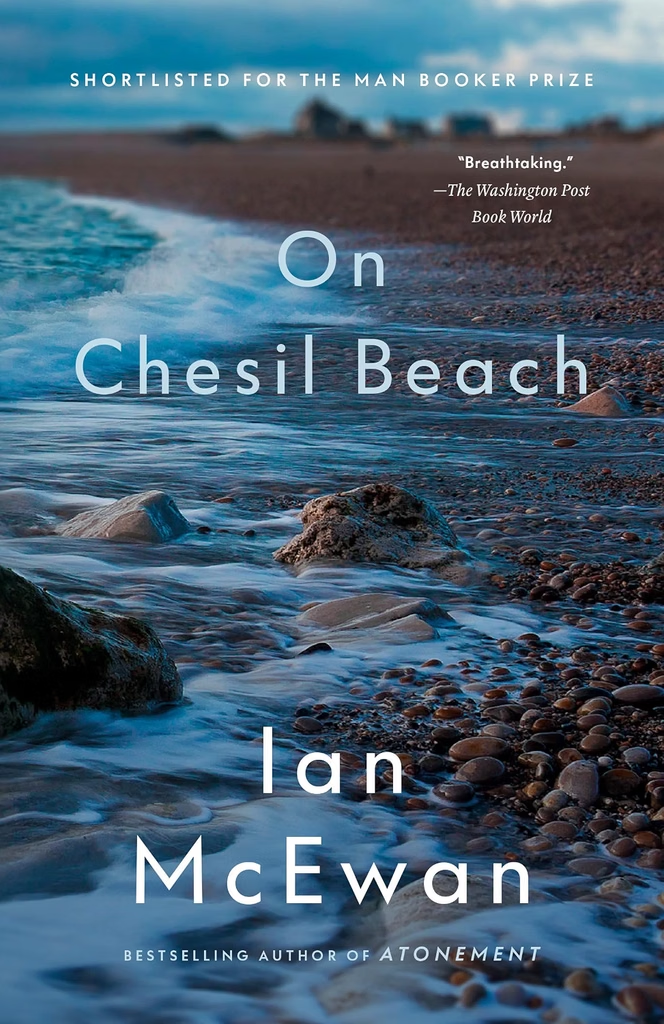
3. On Chesil Beach
Two newlyweds arrive at their honeymoon unable to communicate honestly about sex, fear, and expectation. Short but devastating, the novel shows how a single evening—and a few unspoken words—can shape an entire life.
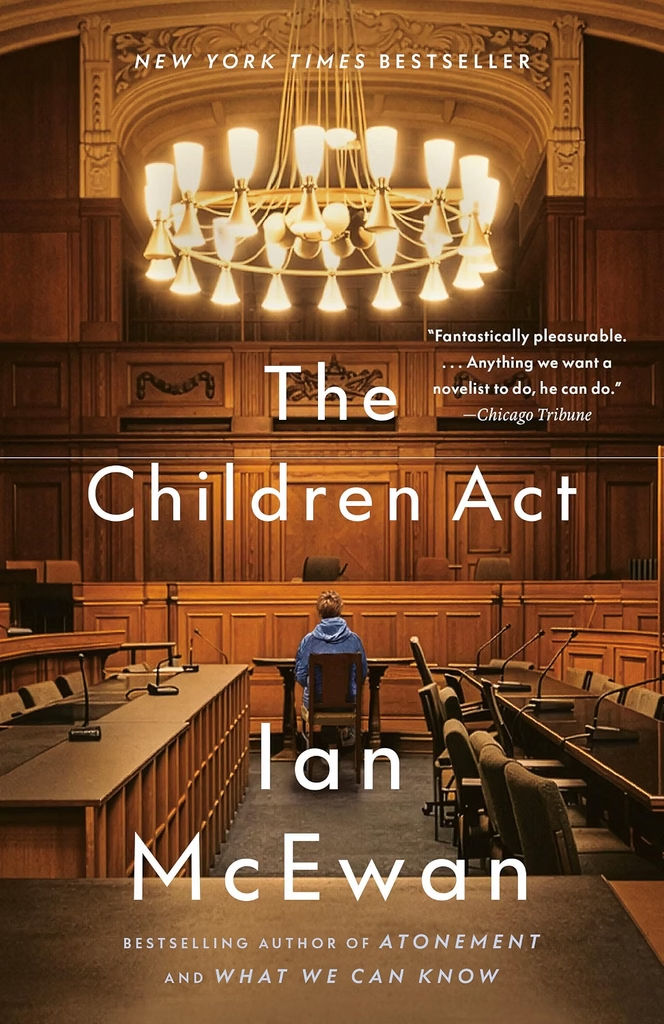
4. The Children Act
High Court judge Fiona Maye must decide whether a teenage Jehovah’s Witness can refuse a potentially lifesaving blood transfusion. The result is a thoughtful, emotionally restrained novel about law, faith, responsibility, and personal autonomy.
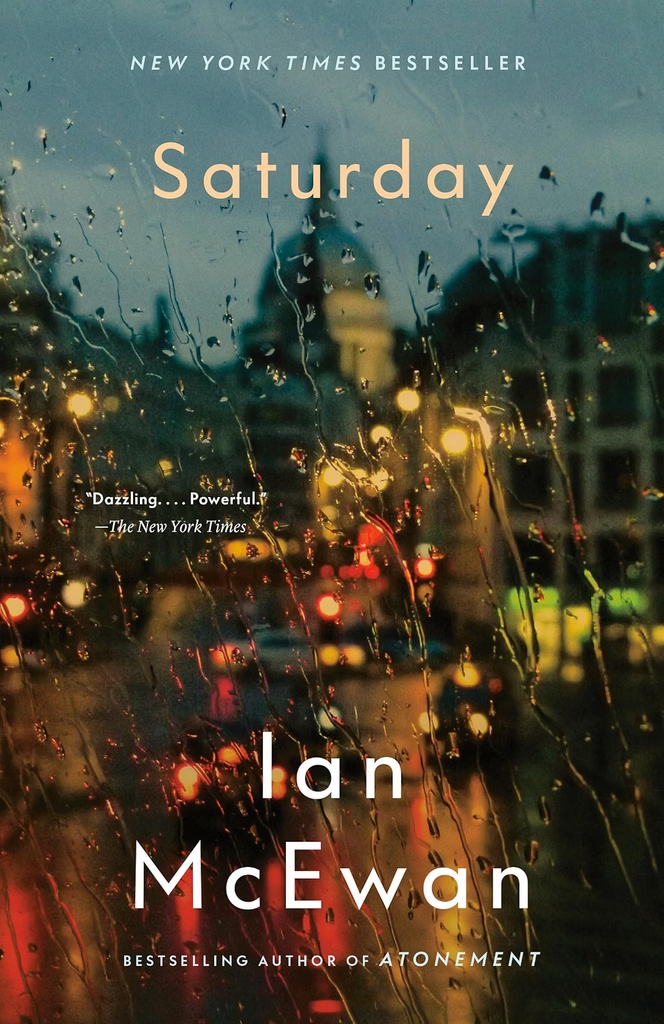
5. Saturday
Set over a single day in London in 2003, Saturday follows neurosurgeon Henry Perowne as an apparently ordinary weekend gradually becomes threatening. It is one of McEwan’s most intellectual novels, exploring politics, privilege, violence, and the fragility of comfortable lives.
6. The Child in Time
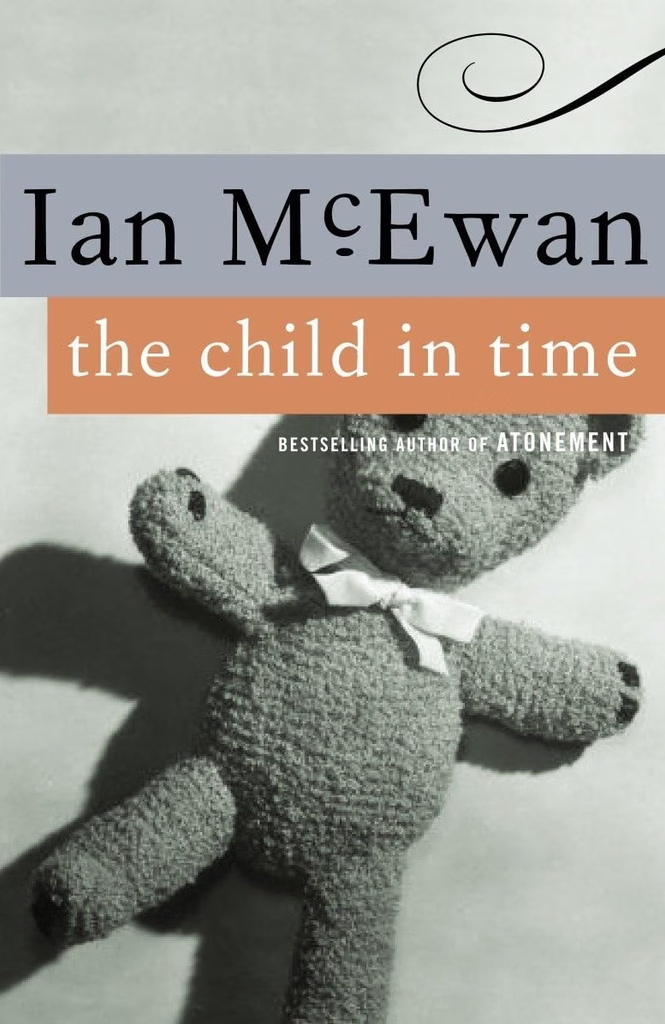
After his young daughter disappears from a supermarket, children’s author Stephen Lewis struggles with grief and the collapse of his marriage. McEwan transforms a heartbreaking premise into a wider meditation on childhood, memory, loss, and time.
7. Amsterdam
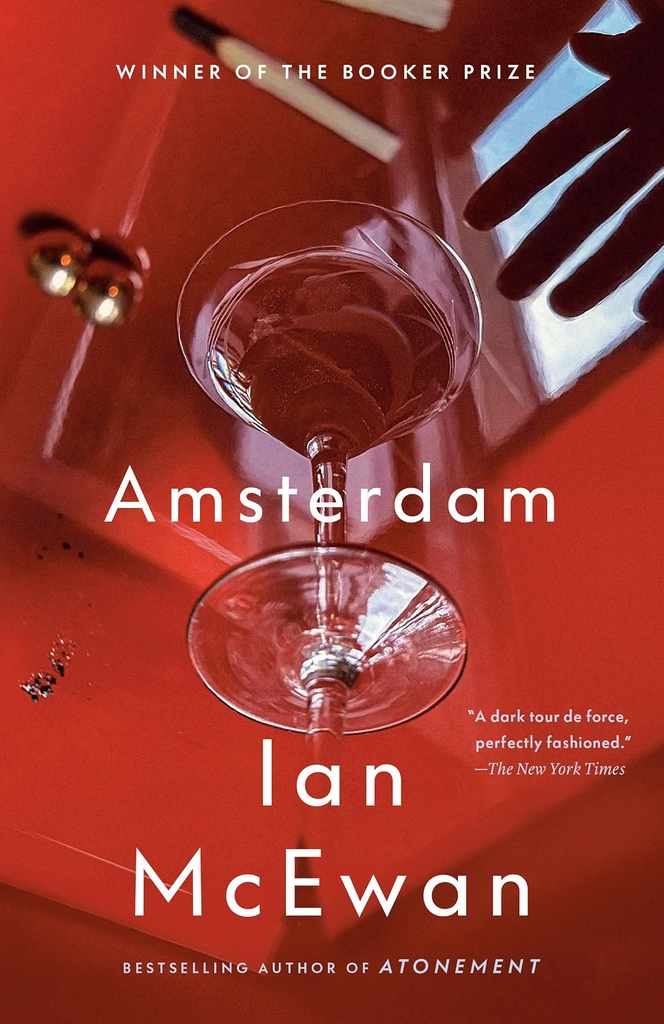
Two successful friends meet at the funeral of a woman they both once loved, only for their friendship to descend into rivalry and revenge. McEwan’s Booker Prize-winning novel is a sharp, darkly funny satire of vanity and moral hypocrisy.
8. The Cement Garden
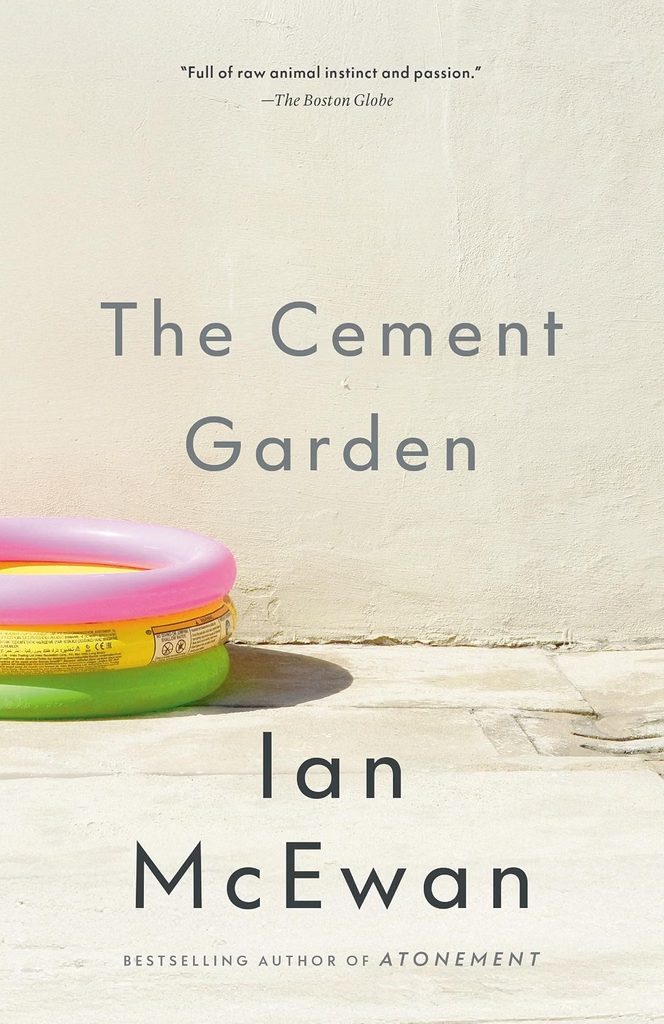
After their parents die, four siblings conceal their mother’s death to avoid being separated. One of McEwan’s earliest and darkest novels, The Cement Garden is disturbing, claustrophobic, and perfect for readers who enjoy transgressive or Gothic fiction.
Why Some Readers Don’t Like Ian McEwan
It would be dishonest to pretend McEwan works for everyone.
Some readers find his characters emotionally cold. Others find his prose overly controlled or his intellectual interests intrusive.
And yes, sometimes his characters spend a great deal of time thinking.
If your ideal novel involves constant action, dramatic plot twists every twenty pages, and instantly lovable protagonists, McEwan may require patience.
But that restraint is also part of his appeal.
The emotional temperature can seem cool until you realise you’re standing inside a burning building.
McEwan often delays emotional release. He allows consequences to accumulate quietly.
Then suddenly a sentence lands like a stone.
Who Should Read Ian McEwan?
You should probably try McEwan if you enjoy literary fiction that combines psychological depth with strong plotting.
Readers who appreciate writers such as Kazuo Ishiguro, Julian Barnes, Margaret Atwood, Graham Swift, or J.M. Coetzee may find plenty to admire.
He is particularly suited to readers fascinated by moral dilemmas.
What would you do? What should someone have done? Can an unforgivable action ever be repaired? Does understanding someone’s motivation make their behavior less wrong?
McEwan rarely provides comfortable answers. That’s precisely the point.
Ian McEwan Makes You Suspicious of Certainty
Perhaps the strongest reason to read Ian McEwan is that his fiction teaches you to distrust certainty.
Characters think they know what they saw.
They think they understand another person.
They think their marriage is secure.
They think they are rational.
They think they know themselves.
Then reality intervenes.
McEwan’s fiction repeatedly exposes the distance between perception and truth.
And that distance can be enormous.
It is one of the reasons his novels linger after you finish them. The final page doesn’t necessarily resolve the moral problem. Sometimes it makes the problem larger.
You close the book and continue arguing with it.
Those are often the books worth remembering.

Conclusion
Ian McEwan isn’t always a comfortable writer. That’s part of what makes him worth reading.
His novels explore the uncomfortable spaces between intention and consequence, love and misunderstanding, civilisation and violence, memory and invention. He takes ordinary people, gives them ordinary lives, and then introduces one small disturbance.
A misunderstanding. An obsession. A stranger. A decision. A secret.
From there, everything can unravel.
Start with Atonement if you want his grandest combination of history, romance, guilt, and literary experimentation. Try On Chesil Beach if you want something intimate and devastating. Pick Enduring Love for psychological tension or Machines Like Me if philosophical science fiction is more your style.
Whichever doorway you choose, don’t expect McEwan to simply entertain you.
He is much more likely to leave you staring at the ceiling afterward, replaying what happened and wondering what you would have done differently.
And perhaps that is one of the best things a novelist can do.
FAQs
Did you like it? Pin this post for later!